Why small businesses need managed websites in 2026
Discover why managed websites are essential for small business growth in 2026. Learn how professional management protects revenue, boosts leads, and eliminates DIY headaches.


Many small business owners believe having a polished logo means they have a strong brand. That’s a costly misconception. Your brand is the sum of every interaction customers have with your business, and your website is often the first and most lasting impression. In 2026, website design impacts how customers perceive your values, trust your expertise, and choose your services over competitors. This guide clarifies how strategic web design builds powerful branding for service businesses.
| Point | Details |
|---|---|
| Web design shapes trust | Effective design builds credibility and influences customer decisions within seconds. |
| Mobile optimization matters | Over 60% of traffic comes from mobile devices, making responsive design essential for branding. |
| UX and SEO work together | Fast, accessible sites improve search rankings and strengthen brand perception simultaneously. |
| Edge cases protect loyalty | Planning for unusual scenarios prevents frustration and maintains brand reputation. |
| Strategic alignment drives results | Aligning web design with brand strategy increases conversions by 20 to 30 percent. |
Branding encompasses far more than visual identity. It represents the entire emotional connection and perception customers develop about your business. Your website serves as the primary digital channel to communicate brand values, personality, and expertise to potential customers who are actively searching for solutions.
Research confirms that a strong brand attracts customers, investors, and talent for small and mid-sized enterprises. When your website design aligns with your brand strategy, visitors immediately understand what you stand for and why they should trust you. Poor design, by contrast, signals unprofessionalism and drives prospects to competitors.
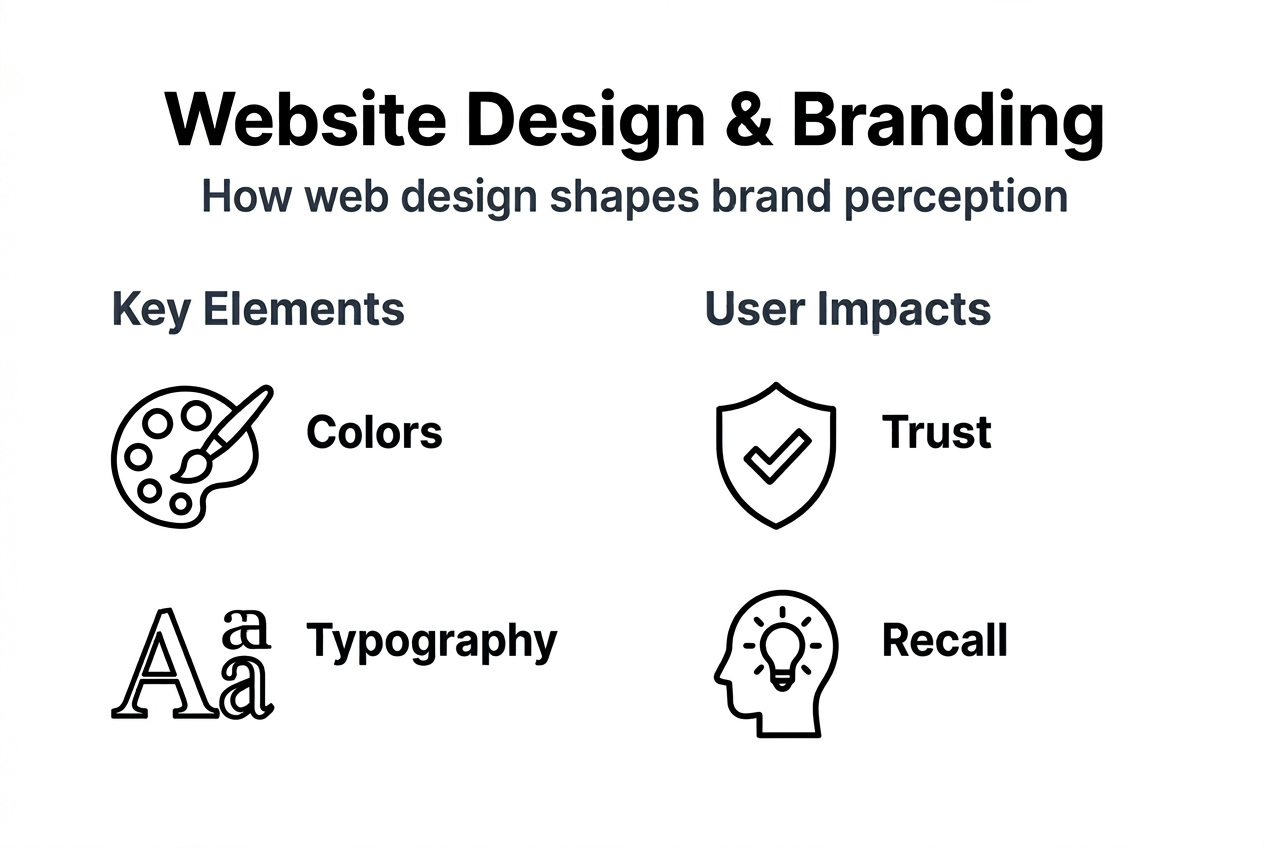
Effective website design guides visitors toward meaningful actions that support business growth. Consider these core connections between design and branding:
User experience elements directly influence whether customers remember your brand positively and return for repeat business. Every design choice either strengthens or weakens the brand perception you’ve worked to build.
First impressions form almost instantly. Users form opinions about companies within seconds of viewing websites, making design quality a critical trust signal. If your site loads slowly, displays poorly on mobile devices, or features confusing navigation, visitors assume your services reflect the same lack of attention to detail.

Trust grows through specific design elements that demonstrate professionalism and reliability. Intuitive navigation helps customers find information without frustration. Consistent visual branding across pages reinforces that you’re organized and detail oriented. Clear, jargon free messaging shows you understand customer challenges and speak their language.
Speed and mobile responsiveness serve as foundational trust signals in 2026. Slow sites frustrate users and harm search rankings, while mobile friendly designs accommodate the majority of traffic. Studies show that effective web design builds trust and significantly improves conversion rates, with well executed sites achieving 20 to 30 percent conversion improvements.
Seamless user journeys guide visitors from initial curiosity to taking action, whether that’s requesting a quote, scheduling a consultation, or signing up for updates. Every friction point in that journey represents lost opportunities and weakened brand perception. Optimizing these paths directly impacts your bottom line.
Pro Tip: Prioritize website speed and mobile usability above decorative features. Fast, accessible sites build more trust than visually impressive but slow loading pages, and search engines reward performance with better rankings.
User experience and search engine optimization work together to amplify brand strength. Thoughtful web design directly impacts SEO by improving navigation structure, page load speed, and accessibility features that search engines prioritize. When your site ranks higher and delivers better experiences, your brand gains visibility and credibility simultaneously.
Mobile first design has become essential rather than optional. With over 60 percent of website traffic originating from mobile devices, especially for local service businesses, responsive design directly affects how many potential customers can access and engage with your brand. Neglecting mobile optimization means surrendering market share to competitors who prioritize accessibility.
Edge cases represent uncommon but impactful scenarios that test your design’s resilience. Account lockouts, name changes, form errors, and unusual data inputs might affect only a small percentage of users, but poor handling of edge cases leads to significant user abandonment and damaged brand loyalty. Planning for these scenarios demonstrates thoroughness and respect for all customers.
Consider how UX features create compounding benefits for branding and SEO:
| UX Feature | SEO Impact | Branding Impact |
|---|---|---|
| Fast load times | Higher search rankings | Signals professionalism and respect for user time |
| Mobile responsiveness | Mobile-first indexing advantage | Demonstrates accessibility and modern standards |
| Clear navigation | Better crawlability | Communicates organization and user focus |
| Accessibility features | Expanded reach | Shows inclusivity and attention to detail |
| Error handling | Reduced bounce rates | Prevents frustration and maintains trust |
Pro Tip: Design for messy real life scenarios, not just ideal users. Test your site with incorrect inputs, expired sessions, and edge cases to identify friction points before customers encounter them.
Strategic website design begins with clear brand strategy, not visual preferences. Before selecting colors or layouts, define your brand values, target audience pain points, and competitive differentiators. Ignoring brand strategy in web design costs market share as customers gravitate toward competitors with clearer positioning.
Market research informs every design decision from messaging tone to keyword targeting. Conducting thorough market research and competitor analysis reveals gaps in competitor offerings and opportunities to differentiate your brand through design choices. This research phase prevents costly redesigns when initial assumptions prove incorrect.
Follow this framework to align website design with branding goals:
Compare these approaches to understand the impact of strategic alignment:
| Poor Branding Approach | Effective Branding Approach |
|---|---|
| Design before strategy | Strategy informs design decisions |
| Generic stock imagery | Custom visuals reflecting brand personality |
| Complex navigation | Intuitive, user-tested pathways |
| Desktop-only focus | Mobile-first responsive design |
| Ignoring site speed | Optimized performance from launch |
| No edge case planning | Robust error handling and fallbacks |
Implementing these principles requires balancing aesthetic preferences with strategic business goals. Your website’s role in digital marketing extends beyond attracting visitors to converting them into customers and advocates. Every design element should serve both branding and conversion objectives.
Small businesses often struggle with DIY website headaches when attempting to implement these principles without technical expertise. Professional guidance ensures design decisions support long term brand growth rather than creating maintenance burdens or performance issues.
Translating brand strategy into compelling websites requires both creative vision and technical expertise. Professional web design services help small and mid-sized service businesses implement the principles outlined in this guide without the trial and error of DIY approaches.
MonsterWP specializes in custom websites built on WordPress, starting at $299 per month with no long contracts or hidden fees. Every site is optimized for speed, mobile responsiveness, and search engine visibility from day one. Our managed approach includes unlimited content updates and rapid revisions, so your website evolves with your brand.
Beyond web design, our digital marketing services amplify brand reach through SEO, social media management, and paid advertising across Google, Meta, LinkedIn, and TikTok. Our WordPress services handle hosting, security, and performance optimization, freeing you to focus on serving customers while we handle the technical details.
Pro Tip: Partnering with experts who understand both branding strategy and technical execution saves time and prevents costly mistakes that harm your market position.
A logo is simply a graphic symbol representing your business visually. Your brand encompasses the entire perception and emotional connection customers develop through every interaction with your company. Most small businesses confuse having a logo with having a brand, missing opportunities to strategically shape customer perceptions. Brand includes your values, messaging, customer experience, reputation, and the consistent delivery of promises across all touchpoints.
Customer trust grows from ease of use, visual consistency, and professionalism demonstrated through design choices. Effective web design builds trust and improves conversion rates by signaling attention to detail and customer focus. Poor design quickly drives prospects to competitors who appear more credible and organized. Fast loading times, clear navigation, and mobile responsiveness serve as immediate trust signals that influence purchasing decisions.
Mobile first design ensures accessibility and better search engine rankings in an increasingly mobile dominated landscape. Over 60% of website traffic comes from mobile devices, especially for local service businesses where customers search on the go. Neglecting mobile users means losing significant customer segments to competitors who prioritize responsive design. Search engines also penalize sites that deliver poor mobile experiences.
Edge cases are uncommon but impactful scenarios that test how your website handles unusual situations like account lockouts, form errors, or unexpected user inputs. Poor handling of edge cases like account lockouts harms user trust and brand loyalty by creating frustration during critical moments. Properly managing these scenarios prevents user abandonment and demonstrates thoroughness in user experience planning. Planning for edge cases protects brand reputation when things don’t go perfectly.
Your website should load in under three seconds to maintain credibility and avoid high bounce rates. Page speed directly impacts both user experience and search engine rankings, making it a critical brand signal. Visitors interpret slow loading as unprofessionalism or outdated technology, damaging trust before they even see your content. Prioritizing performance optimization through image compression, efficient code, and quality hosting protects your brand reputation and improves conversion rates.
Discover why managed websites are essential for small business growth in 2026. Learn how professional management protects revenue, boosts leads, and eliminates DIY headaches.

Discover how website design directly impacts lead generation for service businesses. Learn data-backed strategies to optimize speed, mobile, CTAs, and trust signals.