
The Role of Google Search Ranking for Business Growth
Discover the crucial role of Google search ranking in driving business growth. Learn how to optimize your online presence and boost visibility!


Your website crashes at 2 AM. By morning, you’ve lost three quote requests and dropped in search rankings. This scenario repeats across thousands of small businesses every week. Modern websites demand constant professional oversight to protect revenue, maintain security, and capture leads. This guide reveals why managed website services have become essential infrastructure for sustainable growth.
| Point | Details |
|---|---|
| Websites are critical infrastructure | Your site functions as a 24/7 sales, marketing, and customer service platform requiring professional management. |
| DIY approaches create costly risks | Unmanaged sites face higher downtime, security breaches, and SEO penalties that directly impact revenue. |
| Managed services integrate growth systems | Professional oversight combines technical maintenance with SEO, content updates, and marketing coordination. |
| Measurable outcomes justify investment | Businesses using managed websites experience faster growth, higher lead conversion, and fewer technical emergencies. |
| Provider selection determines success | Transparent pricing, uptime guarantees, and rapid support distinguish effective managed services from mediocre options. |
Nearly three-quarters (73%) of U.S. small businesses had a website in 2023, indicating wide recognition of digital presence importance. Yet having a website and managing it effectively are entirely different challenges. Your site now operates as continuous marketing, sales, and customer service infrastructure. It answers questions at midnight, captures leads during holidays, and represents your brand to prospects who never call.
This complexity demands expertise most business owners don’t have time to develop. Security patches release weekly. Search algorithms update constantly. Performance optimization requires technical knowledge. One outdated plugin can crash your entire site. One security gap can expose customer data. Small businesses lacking professional website management face higher risks including security breaches, downtime, and SEO penalties that directly damage revenue.
Consider this contrast: agencies managing 140+ websites experience systematic monitoring, automated backups, and immediate incident response. They catch problems before customers notice. Compare that to the typical DIY approach where issues surface only after leads disappear and revenue drops. Your website isn’t a set-it-and-forget-it asset anymore. It’s infrastructure requiring the same attention you give to accounting, inventory, or customer relationships.
Professional management transforms websites from potential liabilities into reliable growth engines. When technical foundations stay solid, you can focus on marketing, content, and customer engagement. When security stays current, you avoid costly breaches. When performance stays optimized, visitors convert into customers. This shift from reactive fixes to proactive management makes the difference between websites that support growth and those that drain resources. Understanding how to avoid DIY website headaches helps clarify why professional oversight matters.
“Modern websites function as business-critical infrastructure, not optional marketing accessories. Professional management ensures they fulfill this role reliably.”
Most business owners view their website as a project with a finish line. You hire someone, they build it, and you’re done. This mindset causes serious problems because websites require ongoing care similar to vehicles or buildings. Ignoring maintenance doesn’t pause deterioration. It accelerates it.
The DIY illusion proves particularly costly. Platform builders make website creation look simple with drag-and-drop tools and templates. Creating pages feels manageable. But maintaining security, optimizing performance, fixing broken integrations, and keeping up with algorithm changes requires specialized knowledge. You wouldn’t perform your own dental surgery to save money. The same logic applies to technical infrastructure supporting your revenue.
Another persistent myth suggests managed services cost too much for small businesses. This perspective ignores the true cost of DIY failures. Calculate the revenue lost from just one day of downtime. Add the cost of emergency fixes when something breaks at the worst moment. Factor in the opportunity cost of hours spent troubleshooting instead of serving customers. Suddenly, predictable monthly management fees look like smart insurance.
Some owners believe they can handle updates themselves by clicking buttons in their dashboard. They miss the bigger picture. Updates sometimes break sites. Security requires more than installing patches. Performance optimization demands testing and technical adjustments. SEO needs strategic content updates aligned with search behavior. These interconnected systems require expertise and consistent attention.
The managed services sector has evolved dramatically. Modern providers don’t just fix broken things. They proactively optimize, strategically improve, and systematically prevent problems. They integrate technical management with marketing execution, turning your website into a coordinated growth system rather than an isolated digital brochure. Recognizing common DIY website management pitfalls helps business owners make informed decisions about their approach.
Pro Tip: Before dismissing managed services as too expensive, calculate your hourly rate and multiply by hours spent on website tasks monthly. Most owners discover professional management costs less than their own time investment while delivering superior results. Consider how WordPress hosting impacts business outcomes when evaluating your options.
Managed website services handle everything required to keep your site secure, fast, and effective. This includes continuous security monitoring, automatic backups, performance optimization, and immediate response to issues. You get professional expertise without hiring full-time staff or learning complex technical skills yourself.
Security management alone justifies the investment. Custom-built and managed WordPress websites optimized for speed and security provide sustainable growth platforms for small businesses. Providers monitor threats continuously, apply patches immediately, and maintain security protocols that prevent breaches. One security incident can cost thousands in remediation plus immeasurable damage to customer trust. Professional management prevents these disasters.

Performance optimization delivers measurable business results. Faster loading speeds improve search rankings and conversion rates. Mobile optimization captures the majority of web traffic. Accessibility features expand your potential customer base. Professional managers test, measure, and systematically improve these factors instead of hoping everything works.
Content management transforms from burden to competitive advantage. Unlimited content updates mean you can refresh pages, add blog posts, update offers, and respond to market changes without waiting weeks or paying per-change fees. This agility helps you capitalize on opportunities and stay relevant to your audience.
Integration with broader marketing efforts multiplies your website’s value. When managed services include SEO optimization, your site attracts qualified traffic. When they coordinate with social media and advertising campaigns, your marketing works cohesively instead of in isolated silos. This integration approach treats your website as the hub of your digital presence, not a standalone element. Learning about website redesign best practices and current design trends for 2026 helps you evaluate provider capabilities.
Businesses using advanced technology including managed websites grow faster and generate more leads than those relying on outdated or poorly maintained sites. The data proves what logic suggests: professional website management directly impacts business performance.
Companies with managed websites report significantly fewer technical emergencies and less downtime. When problems occur, resolution happens within hours instead of days or weeks. This reliability protects revenue by ensuring your site stays available to capture leads and serve customers. Every hour of downtime represents lost opportunities you can’t recover.
SEO improvements from professional management generate compounding returns. Better technical foundations help search engines crawl and index your content effectively. Faster loading speeds improve rankings. Regular content updates signal relevance. These factors combine to increase organic traffic, which converts at higher rates than paid advertising because visitors arrive with specific intent.
User experience enhancements directly boost conversion rates. Professional managers identify friction points, optimize navigation, improve call-to-action placement, and ensure mobile visitors have excellent experiences. Small improvements across multiple elements create substantial cumulative impact on lead generation and sales.
| Outcome | Managed Sites | Unmanaged Sites |
|---|---|---|
| Average uptime | 99.9% | 97-98% |
| Security incidents per year | Less than 1 | 3-5 |
| Organic traffic growth | 40-60% annually | 10-20% annually |
| Lead conversion improvement | 25-35% | 5-10% |
| Technical support response time | Under 2 hours | 24-48 hours |
Customer satisfaction metrics improve when websites function reliably. Visitors trust businesses with fast, professional, secure sites. They abandon slow or broken experiences immediately. Professional management ensures your site builds confidence instead of creating doubt. Understanding how proper website management boosts leads demonstrates these principles in practice.
“The difference between managed and unmanaged websites shows clearly in uptime statistics, security records, and lead generation metrics. Professional oversight transforms websites from cost centers into growth assets.”
Three primary approaches exist for handling your website: doing it yourself, hiring traditional agencies, or adopting managed services. Each model carries distinct tradeoffs affecting cost, quality, speed, and business outcomes.
DIY solutions appeal to budget-conscious owners and those comfortable with technology. Platform builders like Wix or Squarespace reduce technical barriers. However, this approach demands significant time investment for tasks outside your expertise. You become responsible for security, performance, troubleshooting, and updates. When problems arise, you’re stuck researching solutions instead of running your business. The hidden costs accumulate through lost time, revenue loss from downtime, and suboptimal results from amateur implementation.
Traditional agencies provide high-touch, customized service with dedicated account managers. They excel at complex projects requiring extensive strategy and custom development. The tradeoff involves premium pricing, slower response times for routine updates, and often rigid contracts. Many small businesses find agency costs prohibitive and update turnaround times frustrating when they need to respond quickly to market changes.
Managed services occupy the middle ground, delivering professional expertise at accessible price points. These providers handle ongoing technical management, security, performance, and content updates for predictable monthly fees. Response times stay rapid because they focus on efficient service delivery rather than high-touch consultation. This model works particularly well for businesses wanting expert management without agency-level costs or DIY headaches.

| Factor | DIY | Traditional Agency | Managed Services |
|---|---|---|---|
| Monthly cost | $20-100 (platform fees) | $2,000-10,000+ | $299-1,500 |
| Technical expertise required | High | None | None |
| Update turnaround | Immediate (if you know how) | 1-2 weeks | 24-48 hours |
| Security management | Your responsibility | Included | Included |
| Scalability | Limited | High | High |
| Support availability | Self-service | Business hours | Extended/24-7 |
| Risk of downtime | High | Low | Very low |
Pro Tip: When evaluating options, prioritize uptime guarantees and support response times over feature lists. A website that’s down costs you money every minute. Fast, reliable support matters more than having every possible bell and whistle. Resources on ditching traditional agencies and comparing AI DIY vs. managed design provide additional decision-making frameworks.
Transitioning to managed website services requires systematic evaluation and planning. Start by assessing your current site’s technical health. Run speed tests, check for security vulnerabilities, review backup systems, and analyze uptime history. Document recurring problems and time spent on maintenance. This baseline clarifies what you’re paying for indirectly through DIY efforts and what professional management should improve.
Compare providers methodically using consistent criteria. Request detailed information about their technology stack, security protocols, backup systems, and support availability. Ask specific questions about response time guarantees, update turnaround, and how they handle emergencies. Review client testimonials focusing on reliability and support quality rather than just design capabilities.
Plan your transition to minimize business disruption. Quality providers migrate your existing site carefully, testing functionality before going live. Schedule the transition during low-traffic periods if possible. Ensure you have backup access to critical business information. Communicate with your team about new processes for requesting updates or reporting issues.
After migration, actively use managed site features to maximize value. Submit content updates regularly to keep your site fresh. Request SEO optimizations aligned with your marketing goals. Integrate your website with social media and advertising campaigns. Monitor performance metrics to understand how improvements impact lead generation. Professional management works best when you treat your website as an active marketing asset rather than static digital brochure.
Establish accountability measures with your provider. Review monthly reports on uptime, security, performance, and completed work. Track lead generation and conversion metrics. Schedule quarterly strategy discussions about optimization opportunities. Clear expectations and regular communication ensure you get full value from managed services.
Pro Tip: Focus on providers offering clear service level agreements with specific uptime guarantees and response time commitments. Vague promises about “great support” mean nothing when your site goes down at a critical moment. Concrete SLAs protect your business. Following proven website redesign steps ensures smooth implementation.
Transitioning from DIY frustration or overpriced agencies to reliable managed services doesn’t require complexity. MonsterWP delivers fully managed WordPress websites optimized for speed, security, and lead generation starting at $299 monthly. Every site gets custom-built using professional tools, backed by unlimited content updates and rapid revision turnaround.
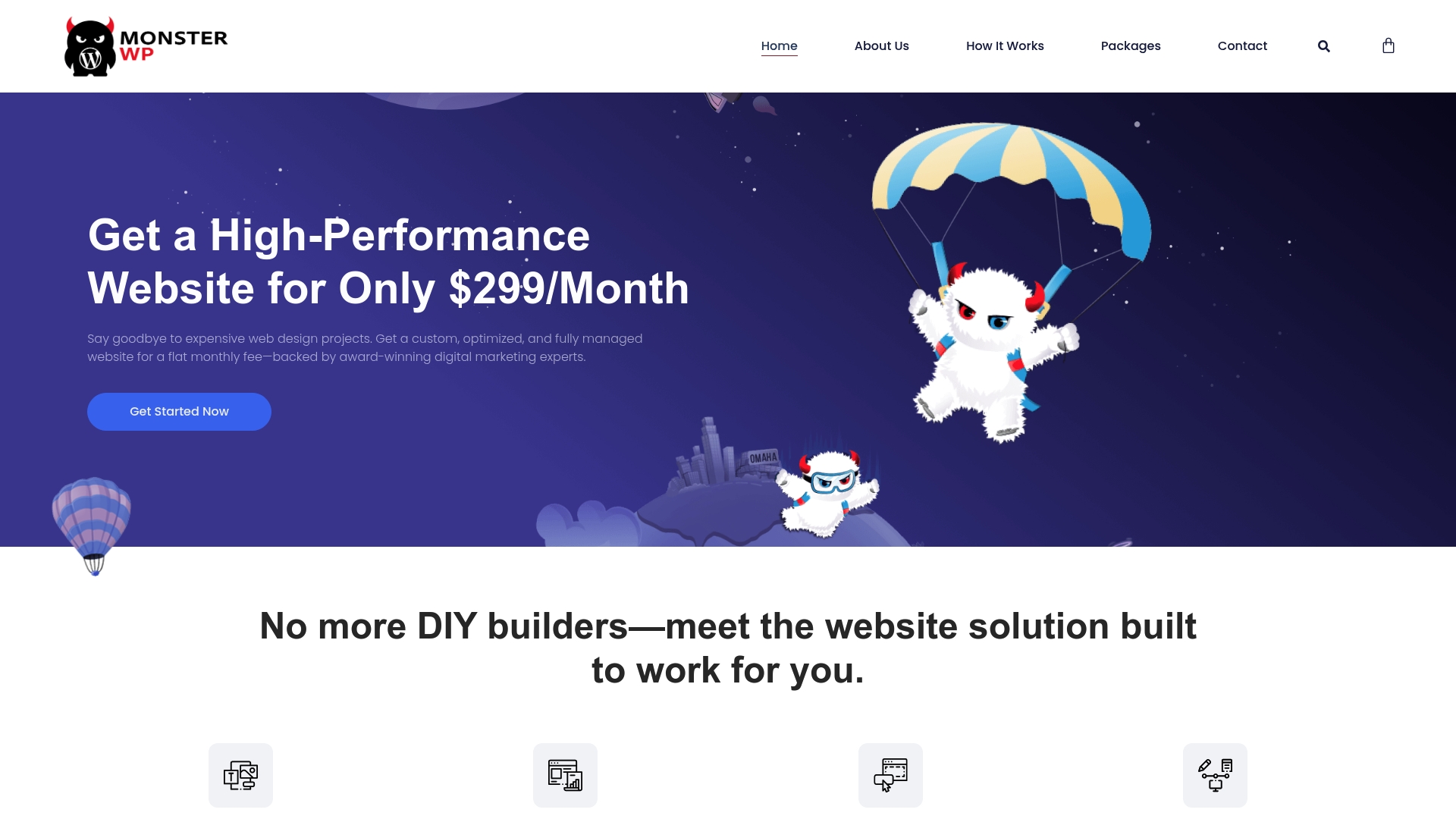
Beyond technical management, integrated growth systems combine your website with SEO, social media, and advertising coordination. This unified approach ensures every digital channel works together instead of competing for attention. No long contracts. No surprise fees. Just transparent pricing and measurable results. Whether you need a custom fully managed website, integrated SEO and PPC management, or comprehensive social media marketing, professional support lets you focus on running your business while experts handle your digital growth infrastructure.
Managed website services provide ongoing professional management of your site’s technical infrastructure, security, performance, and content. Unlike DIY platforms or one-time agency projects, managed services deliver continuous oversight ensuring your site stays secure, fast, and optimized. Providers handle updates, backups, monitoring, and improvements as part of predictable monthly pricing. This approach treats your website as critical business infrastructure requiring expert attention rather than a set-it-and-forget-it project.
Professional management optimizes multiple factors affecting lead generation simultaneously. SEO improvements increase qualified organic traffic. Performance optimization reduces bounce rates and improves conversion. Security and reliability build visitor trust. Rapid content updates let you capitalize on marketing opportunities immediately. These elements combine to attract more visitors and convert higher percentages into leads. Businesses typically see 25-50% lead increases within six months of adopting managed services.
Modern managed services offer pricing designed specifically for small business budgets, typically $299-1,500 monthly depending on features and scale. This predictable cost often proves less expensive than hidden DIY expenses including your time, emergency fixes, lost revenue from downtime, and suboptimal results. Calculate hours you currently spend on website tasks monthly and multiply by your hourly rate. Most owners discover professional management costs less while delivering superior outcomes. Quality providers offer transparent pricing without surprise fees or long-term contracts.
Prioritize concrete service level agreements specifying uptime guarantees and support response times. Verify security protocols including monitoring frequency, backup systems, and incident response procedures. Confirm update turnaround times for content changes and technical requests. Evaluate their approach to SEO, performance optimization, and marketing integration. Check client reviews focusing on reliability and support quality rather than just design capabilities. Transparent pricing, rapid communication, and proven track records distinguish excellent providers from mediocre options.
Discover the crucial role of Google search ranking in driving business growth. Learn how to optimize your online presence and boost visibility!

Discover what is Elementor Pro and how it elevates your website design with advanced features, powerful tools, and seamless customization!