
Top 3 GoDaddy.com Hosting Alternatives 2026
Explore the top 3 GoDaddy.com alternatives for reliable hosting solutions. Compare to make an informed decision for your business needs.


TL;DR:
- Consistent NAP information across online platforms is crucial for local SEO success.
- Creating dedicated service and location pages with localized content improves search rankings.
- Ongoing review management and profile activity are essential for maintaining local search visibility.
You built the website. You paid someone to make it look great. And yet, when a neighbor searches for the exact service you offer, your business is nowhere to be found. That’s the painful reality for thousands of local small business owners across the U.S. The good news? You don’t need an overpriced agency to fix it. Local SEO is one of the few digital strategies where consistent, focused effort beats big budgets every time. This guide breaks down exactly what to do, step by step, so you can improve your visibility, attract qualified leads, and compete in your local market without handing your wallet to someone else.
| Point | Details |
|---|---|
| Directory consistency matters | Keep your business name, address, and phone number identical across all listings for better search trust. |
| Specialized service pages boost ranking | Creating unique pages for each service or location increases your chances of appearing in geographic searches. |
| Reviews drive reputation | Consistent customer reviews and engagement signal trustworthiness and relevance to search engines. |
| Mobile optimization is essential | Make sure your site loads fast and looks good on smartphones to attract local customers and rank higher. |
| DIY beats expensive agencies | With the right steps, you can achieve meaningful local SEO results without hiring costly outside help. |
Before you touch a single webpage or claim a single listing, you need to understand the foundation that makes local SEO work. It’s not about tricks or hacks. It’s about consistency, accuracy, and showing up in the right places.
The single most important concept is NAP consistency. NAP stands for Name, Address, and Phone number. Every time your business appears online, whether on a directory, a social profile, or a review site, your NAP must be identical. Not similar. Identical. Even a small difference like “St.” versus “Street” can confuse search engines and hurt your local rankings. Local citations across directories build your entity authority, and that authority is what pushes you up in local search results.
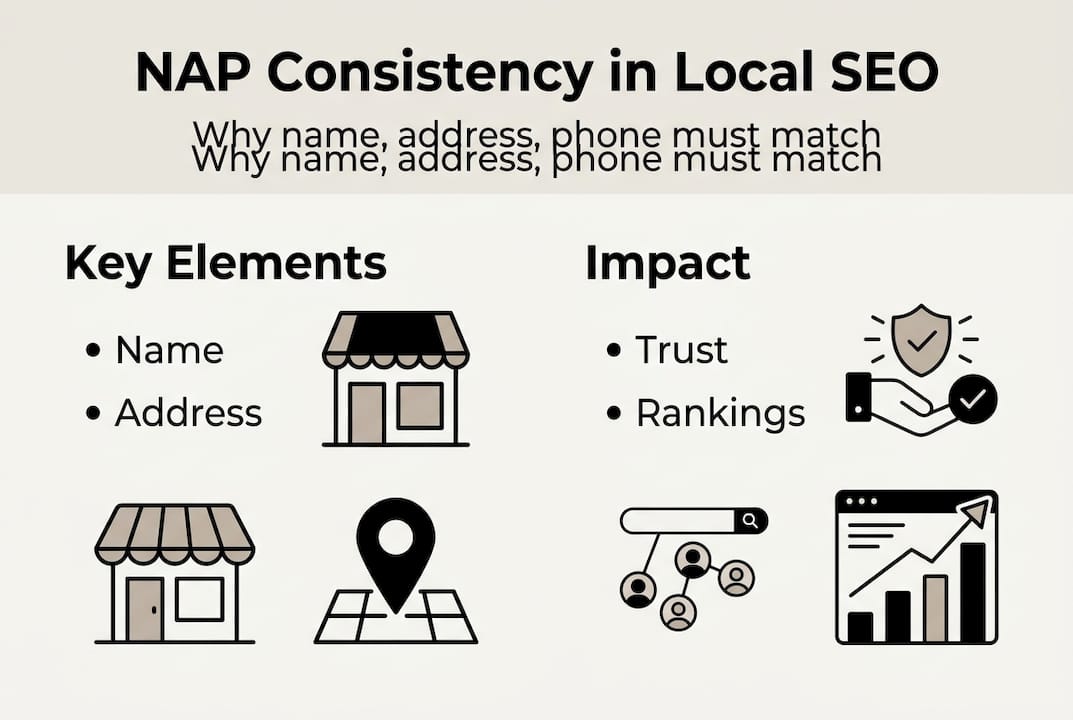
Here’s a quick look at the core platforms you need to claim and keep updated:
| Platform | Why it matters |
|---|---|
| Google Business Profile | Primary driver of local map pack rankings |
| Apple Maps | Captures iPhone and Siri searches |
| Bing Places | Microsoft search and Cortana visibility |
| Yelp | Trust signals and review authority |
| Angi | Industry-specific for home service providers |
Beyond claiming these profiles, you’ll want tools to audit your citations and catch inconsistencies before they do damage. BrightLocal and Moz Local are two of the best options for scanning your NAP data across dozens of directories at once. They’re affordable and built for exactly this kind of work. Understanding SEO pricing explained upfront helps you budget wisely before you invest in any tool or service.
Here’s what you’ll need to get started:
Pro Tip: If you’re a service provider, don’t skip niche directories. Platforms like Angi, HomeAdvisor, or Houzz carry strong domain authority and send targeted traffic that’s already looking for what you offer. These listings can make a measurable difference in competitive markets.
The mindset shift here is simple. Local SEO isn’t a one-time project. It’s a system. And building that system starts with getting your foundation clean and consistent before anything else.
With the right tools and accounts in place, it’s time to turn your website into a local search magnet. Most small business websites make one critical mistake: they use a single generic page to describe everything they do. That approach leaves enormous ranking opportunity on the table.

The fix is straightforward. Create dedicated pages for each service and each location you serve. A plumber in Dallas who also serves Plano and Frisco should have separate pages for each city, not one page that mentions all three in passing. Search engines reward specificity, and so do customers who are searching with intent.
Here’s how to build those pages the right way:
On-page local SEO requires dedicated service and location pages with geo-keywords and schema, NAP footer consistency, and mobile optimization as a baseline, not an afterthought.
| Page element | Local SEO impact |
|---|---|
| Geo-keyword in title tag | High |
| LocalBusiness schema | High |
| NAP in footer | Medium |
| Mobile page speed | High |
| Unique location content | High |
Pro Tip: If you serve multiple locations, resist the urge to use a template and swap out the city name. Write genuinely unique content for each page. Mention local landmarks, neighborhoods, or community details. It signals authenticity to both Google and your potential customers. You can also explore WordPress site types for services to find the right structure for your business model.
If you already have pages that aren’t performing, don’t scrap them. Optimizing existing content is often faster and more effective than starting from scratch.
Once your website is optimized, the next move is to reinforce your online footprint through citations. A citation is any mention of your business name, address, and phone number on an external website. Think of each citation as a vote of confidence in your business’s legitimacy.
Search engines use these signals to verify that your business is real, established, and trustworthy. The more consistent and widespread your citations are, the stronger your local authority becomes. And stronger authority means better rankings.
Here’s what your citation strategy should cover:
Consistent NAP across directories builds entity authority and is one of the most reliable ways to improve your position in local search results.
Auditing your existing citations is just as important as building new ones. Use BrightLocal or Moz Local to scan for duplicate listings, outdated addresses, or mismatched phone numbers. Fix these before adding new listings. A clean citation profile beats a large but messy one every time.
“Your citation profile is your digital fingerprint. Smudge it, and search engines start to doubt you. Keep it clean, and they reward you with visibility.”
Pro Tip: Industry-specific directories can tip the scales in competitive markets. A landscaping company listed on Angi with strong reviews will often outrank a competitor that only appears on generic directories. Don’t underestimate the power of niche authority.
Building a strong citation profile also supports your broader brand credibility. When potential customers see your business listed consistently across trusted platforms, it builds the kind of trust that converts browsers into buyers. Pair this with a strong website, and you’ve got a lead-generating machine. For inspiration on how design and credibility work together, custom website design tips are worth a look.
Now that your listings are live, the work shifts from setup to maintenance. Local SEO isn’t static. Google rewards businesses that stay active, and your competitors aren’t standing still.
The two biggest ongoing levers are reviews and Google Business Profile posts. Reviews signal trust to both search engines and potential customers. More reviews, especially recent ones, push you higher in local results and make your listing more clickable. Posts keep your profile fresh and show Google that your business is active.
Here’s a simple weekly action plan to stay competitive:
This DIY action plan is structured around completing your Google Business Profile in week one, auditing citations in week two, building a reviews system in week three, and maintaining consistent posts and review responses from that point forward.
Pro Tip: Automate your review requests using a simple tool like NiceJob, Birdeye, or even a well-timed text message template. The easier you make it for happy customers to leave a review, the more reviews you’ll get. Set a calendar reminder to check and respond to new reviews every Monday morning.
Reviews also fuel your visibility in ways that most business owners overlook. A business with 80 reviews and a 4.7 rating will almost always outperform one with 10 reviews and a 5.0 rating. Volume and recency matter. Understanding how SEO drives business growth will help you connect these daily habits to your bigger revenue goals.
Here’s the uncomfortable truth: most local SEO guides are written to impress, not to help. They’re packed with jargon, vague advice, and a quiet push toward hiring someone to do it all for you. We think that’s backwards.
The businesses that win at local SEO aren’t the ones with the biggest budgets. They’re the ones that show up consistently, keep their information accurate, and treat every location page and every customer review as an opportunity to stand out.
The biggest mistake we see? Multi-location businesses using copy-paste templates for their location pages. Unique neighborhood pages outperform templates every single time, and thin content is one of the fastest ways to get ignored by Google.
DIY local SEO works when you commit to the fundamentals: clean NAP data, genuine location content, and a steady flow of reviews and posts. You don’t need a 12-month retainer to achieve that. You need a system and the discipline to follow it. The website essentials for success are simpler than most agencies want you to believe.
Stop chasing tactics. Start building habits. That’s what separates the businesses that dominate local search from the ones still wondering why their website isn’t working.
If this guide has shown you anything, it’s that local SEO is absolutely doable on your own. But doing it well, and doing it consistently, takes real time and focus. If you’d rather spend that energy running your business, we’ve got you covered.
At MonsterWP, we build custom WordPress websites that are optimized for local SEO from day one. Every site includes speed optimization, schema markup, mobile-first design, and NAP-ready structure built in. No bloated agency fees. No guesswork. And if you want to go further, our digital marketing add-ons include citation management, review generation, Google Business Profile optimization, and ongoing content that keeps you ranking. We handle the engine so you can focus on the customers walking through your door.
NAP consistency across directories signals trust to search engines and is one of the most direct factors in improving your local rankings. Even minor discrepancies in your business name or address can undermine your authority and push you down in results.
Start with Google Business Profile, Yelp, Bing Places, and Apple Maps as your core listings, then add industry-specific platforms like Angi for home services. Industry-specific directories carry targeted authority that generic listings simply can’t match.
Post to your Google Business Profile at least once per week to maintain relevance and signal activity to Google. Following a structured weekly action plan that includes posts and review responses keeps your profile competitive over time.
Absolutely. Mobile optimization is essential because Google prioritizes mobile-friendly sites in local search results, and the majority of local searches happen on smartphones. A slow or broken mobile experience costs you rankings and customers at the same time.
Explore the top 3 GoDaddy.com alternatives for reliable hosting solutions. Compare to make an informed decision for your business needs.

Unlock the power of content optimization strategies that drive results. Discover how to enhance rankings, leads, and revenue effectively!