
What is managed WordPress hosting: SMB growth benefits
Discover how managed WordPress hosting automates updates, boosts performance 30-60%, and enhances security to help small businesses grow and generate more leads.


Ranking #1 on Google feels like a victory, but what if that top spot doesn’t bring qualified leads? Business website visibility goes far beyond a single search position. It’s about measurable presence across multiple channels, technical excellence, and strategic content that converts visitors into customers. This guide clarifies what visibility truly means and how service businesses can enhance it to generate leads sustainably with minimal daily oversight required.
| Point | Details |
|---|---|
| Visibility is multi-channel | Business website visibility measures your presence across search engines, social platforms, and referral sources, not just rankings. |
| Technical SEO drives discovery | Site speed, mobile responsiveness, and structured data directly impact how search engines and AI tools find and present your content. |
| Content alignment captures AI traffic | Optimizing for user intent and AI-driven search features expands your reach to voice search and generative AI platforms. |
| Qualified leads require conversion strategy | High traffic means nothing without conversion-focused design, clear calls to action, and lead capture systems. |
| Ongoing management sustains growth | Visibility isn’t a one-time setup; consistent updates and monitoring maintain and improve your position over time. |
Business website visibility defines how easily potential clients discover your website when searching for services you provide. For service-oriented companies, this means appearing prominently across search engines, social media, and referral networks where your ideal customers spend time.
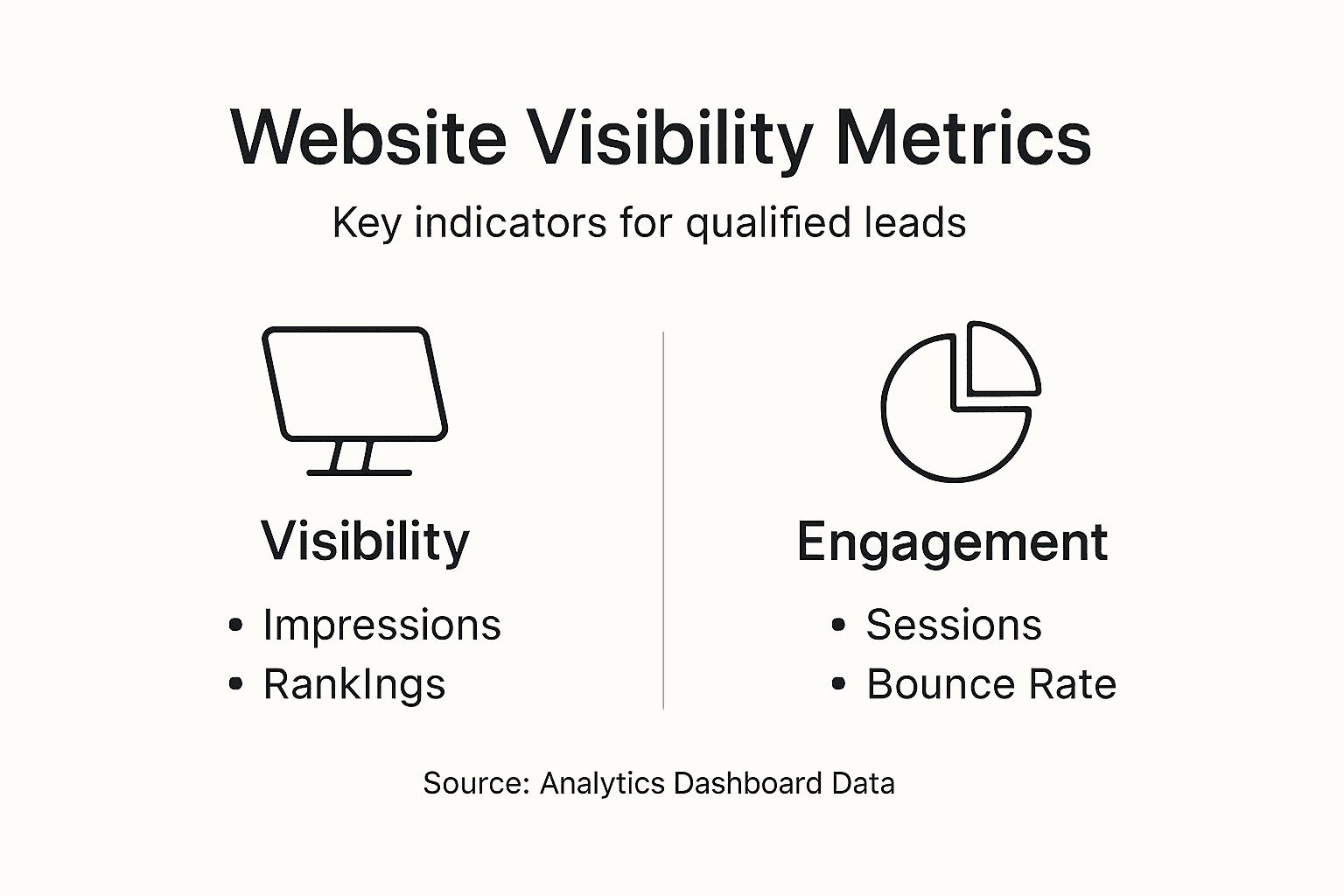
Key metrics include impressions (how often your site appears in search results), click-through rates (percentage of impressions that become clicks), and search rankings for relevant keywords. However, raw traffic volume matters far less than qualified traffic. Qualified visitors actively search for solutions you offer and are likely to become leads.
Service businesses must focus on attracting visitors with purchase intent rather than casual browsers. A website generating 500 qualified monthly visitors outperforms one with 5,000 unqualified visitors. Understanding types of business websites for lead generation helps you structure content and design for the right audience.
Visibility serves as the foundation for consistent lead generation without requiring constant manual promotion. When technical elements, content strategy, and user experience align, your website works as an automated lead generation system requiring minimal daily oversight.
Technical SEO forms the invisible infrastructure that determines whether search engines can find, crawl, and rank your website effectively. Three critical elements drive technical visibility: site speed, mobile responsiveness, and structured data markup.
Site speed directly impacts both search rankings and user behavior. Pages loading in under three seconds keep visitors engaged, while slower sites trigger immediate abandonment. Speed optimization and mobile-first design contributed to a 35% reduction in bounce rate, enhancing visibility across search platforms.

Mobile responsiveness became non-negotiable when Google adopted mobile-first indexing. Search engines now evaluate your mobile site first, meaning poor mobile experience tanks visibility regardless of desktop performance. Service businesses lose qualified leads when contact forms break on smartphones or navigation becomes unusable on tablets.
Structured data markup can improve click-through rates by up to 30%, boosting visibility by helping search engines understand your content context. This code tells Google whether you’re offering services, publishing articles, or listing locations, enabling rich snippets that stand out in search results.
Search engines also consider engagement metrics like bounce rate and time on site when determining rankings. Technical excellence keeps visitors engaged longer, signaling quality to algorithms. Many service businesses avoid common DIY website mistakes by partnering with managed platforms that handle technical optimization automatically.
Pro Tip: Run monthly technical audits checking for broken links, slow-loading pages, and mobile usability issues to maintain optimal visibility as your site grows.
Content strategy must evolve beyond traditional SEO to capture traffic from AI-powered search engines and voice assistants transforming how users find information. Aligning content with user intent remains foundational, but presentation and structure matter more than ever.
AI search engines prioritize content that directly answers specific questions with clear, concise information. Structuring articles with descriptive headings, bulleted lists, and FAQ sections helps AI understand context and extract relevant snippets for featured results. Voice search queries tend toward conversational phrases, requiring content that mirrors natural speech patterns.
Generative AI platforms synthesize information from multiple sources to answer complex queries. Optimizing for these systems means creating authoritative content that AI can confidently cite. Include specific statistics, expert insights, and well-researched facts that establish your content as a reliable source.
Content aligned with AI content optimization principles captures traffic from emerging platforms beyond traditional Google search. This includes ChatGPT, Perplexity, and other AI tools users increasingly consult for business recommendations.
Pro Tip: Update cornerstone content quarterly with fresh statistics and insights reflecting current AI search trends to maintain visibility as algorithms evolve throughout 2026 and beyond.
Accurately measuring website visibility requires looking beyond simple search rankings to capture the full picture of how customers discover and interact with your business online. Google rankings provide one data point, but comprehensive visibility analysis includes branded search volume, direct traffic, social signals, and referral sources.
Branded search volume indicates how often people specifically search for your business name, suggesting strong awareness and recall. Direct traffic shows visitors who type your URL directly or use bookmarks, reflecting established trust. Social signals measure shares, mentions, and engagement across platforms, expanding your reach beyond search engines.
Traffic quality matters more than quantity. Engagement metrics like average session duration, pages per visit, and bounce rate reveal whether visitors find your content valuable. A high bounce rate despite strong rankings signals a disconnect between search intent and page content. Understanding measuring lead-generating website metrics helps you connect visibility data to actual business outcomes.
| Metric | Strengths | Limitations |
|---|---|---|
| Search Rankings | Easy to track, competitive benchmark | Doesn’t measure traffic quality or conversions |
| Organic Traffic | Shows actual visitor volume | Includes unqualified traffic, doesn’t show intent |
| Click-Through Rate | Reveals snippet appeal and relevance | Varies widely by position and query type |
| Engagement Metrics | Indicates content quality and fit | Requires interpretation, affected by site design |
| Conversion Rate | Directly ties to business goals | Small sample sizes can mislead, influenced by many factors |
Use analytics platforms to create custom dashboards connecting visibility metrics with lead generation and revenue. This data-driven approach identifies which channels and content types deliver qualified prospects worth your investment.
Several persistent myths about website visibility lead business owners to invest in strategies that fail to generate qualified leads. Correcting these misconceptions prevents wasted time and budget on ineffective tactics.
Ranking #1 on Google does not automatically generate qualified leads. Position matters, but only about 2.35% of web traffic converts on average, meaning ranking must be paired with conversion strategies. A first-page result for the wrong keyword or with poor page design delivers visitors who bounce without converting.
True visibility encompasses organic search, paid advertising, local map listings, social media presence, and industry directories. Focusing solely on organic rankings ignores valuable traffic sources where your customers actively search for services.
Setting up SEO once does not sustain visibility. Search algorithms update constantly, competitors improve their strategies, and your content becomes outdated. Ongoing optimization, fresh content, and technical maintenance are essential to maintain position.
“Most businesses assume high rankings guarantee leads, but conversion depends equally on page design, clear value propositions, and strategic calls to action throughout the customer journey.”
Conversion-focused content and lead capture systems turn visitors into customers. Without forms, compelling offers, and clear next steps, even massive traffic generates minimal business value. Visibility gets attention, but conversion strategy captures leads.
Building long-term website visibility requires an integrated framework balancing technical excellence, strategic content, user experience optimization, and multi-channel presence. This four-pillar approach creates sustainable lead generation without constant manual effort.
Technical SEO Foundation: Audit site speed, mobile responsiveness, security certificates, and structured data. Fix critical issues immediately, then schedule quarterly technical reviews.
Optimized Content Development: Research keyword intent, create comprehensive guides addressing customer questions, and optimize existing pages with current AI strategies for visibility.
User Experience Enhancement: Improve navigation clarity, streamline conversion paths, and implement clear calls to action on every page.
Integrated Digital Channels: Expand presence across social media, local directories, and paid advertising to capture customers at multiple touchpoints.
| Approach | Technical Support | Content Updates | Lead Generation | Monthly Cost |
|---|---|---|---|---|
| DIY Platform | Self-managed, limited expertise | Manual creation and optimization | Basic forms, no strategy | $50-200 |
| Traditional Agency | Included but slow response | Billed hourly, expensive | Strategy requires separate contract | $2,000-5,000+ |
| Managed Platform (MonsterWP) | Fully managed, expert-led | Unlimited updates included | Integrated SEO and PPC | $299-699 |
Pro Tip: Balance DIY efforts for content creation with expert-managed services for technical optimization and strategic planning to achieve scalable growth without overwhelming your team.
Ongoing monitoring and adaptation keep your visibility strong as AI search evolves and algorithm updates shift rankings. Understanding the differences between managed web design vs DIY helps you choose the right support level for your business stage.
Service businesses implementing comprehensive visibility frameworks see measurable improvements in qualified lead generation with minimal owner oversight required. Real results demonstrate how integrated strategies outperform isolated tactics.
One regional HVAC company integrated technical SEO improvements with targeted social media campaigns and saw qualified leads increase 50% within six months. The business owner spent less than two hours monthly reviewing performance reports while the managed platform handled optimization, content updates, and ad management automatically.
Key success factors from implementations include:
Quantified improvements typically include 40-60% increases in organic traffic, 25-35% reductions in bounce rate, and 3-5x improvements in lead conversion rates compared to previous DIY efforts. These results demonstrate that service businesses achieve measurable growth without dedicated marketing departments.
Businesses using managed SEO & PPC services benefit from expert strategy, consistent execution, and transparent reporting that connects visibility improvements directly to revenue growth. This approach eliminates the guesswork and technical complexity that stalls many service business owners attempting DIY digital marketing.
Achieving strong website visibility and consistent lead generation doesn’t require building an in-house marketing team or paying agency retainer fees that drain your budget. MonsterWP delivers custom, fully managed WordPress websites starting at $299 per month, combining technical excellence with strategic content optimization.
Every MonsterWP site includes speed optimization, mobile-first design, and structured data implementation that drives visibility from day one. Integrated managed SEO and PPC packages expand your reach across organic search and paid advertising without the complexity of managing multiple vendors. Our content optimization services keep your website aligned with evolving AI search requirements throughout 2026 and beyond. Fixed monthly pricing and unlimited content updates give you predictable costs and continuous improvement without surprise bills or complicated contracts.
Update cornerstone content quarterly with fresh statistics and insights to maintain search relevance. Add new blog posts or resources monthly to signal active site management. Technical audits should run monthly to catch issues before they impact rankings.
SEO rankings measure position in search results for specific keywords. Visibility encompasses rankings plus impressions, click-through rates, branded search volume, social presence, and multi-channel discoverability. You can rank well but have poor visibility if your snippets don’t attract clicks or your brand lacks recognition.
Paid advertising delivers immediate visibility in search results and social feeds while organic strategies build momentum. Ads work best combined with solid organic foundation, providing quick wins while SEO efforts mature. Most successful service businesses use integrated approaches balancing both channels.
Mobile optimization is non-negotiable for visibility in 2026. Google indexes mobile versions first, meaning poor mobile experience directly tanks rankings. Over 60% of searches now happen on mobile devices, so mobile-unfriendly sites lose most potential traffic regardless of desktop quality.
Track conversion rates, lead quality scores, and sales close rates from different traffic sources. High visibility with low conversions indicates targeting problems or weak page design. Quality leads demonstrate clear purchase intent, engage with multiple pages, and progress through your sales process efficiently.
Discover how managed WordPress hosting automates updates, boosts performance 30-60%, and enhances security to help small businesses grow and generate more leads.

Learn essential WordPress maintenance steps to protect your site from hacks, boost speed by 200%, and increase leads. Proven strategies for business owners in 2026.