
Website content examples that boost business growth in 2026
Discover proven website content examples that drive qualified leads and business growth in 2026. Learn criteria, see real examples, and get a practical decision guide.

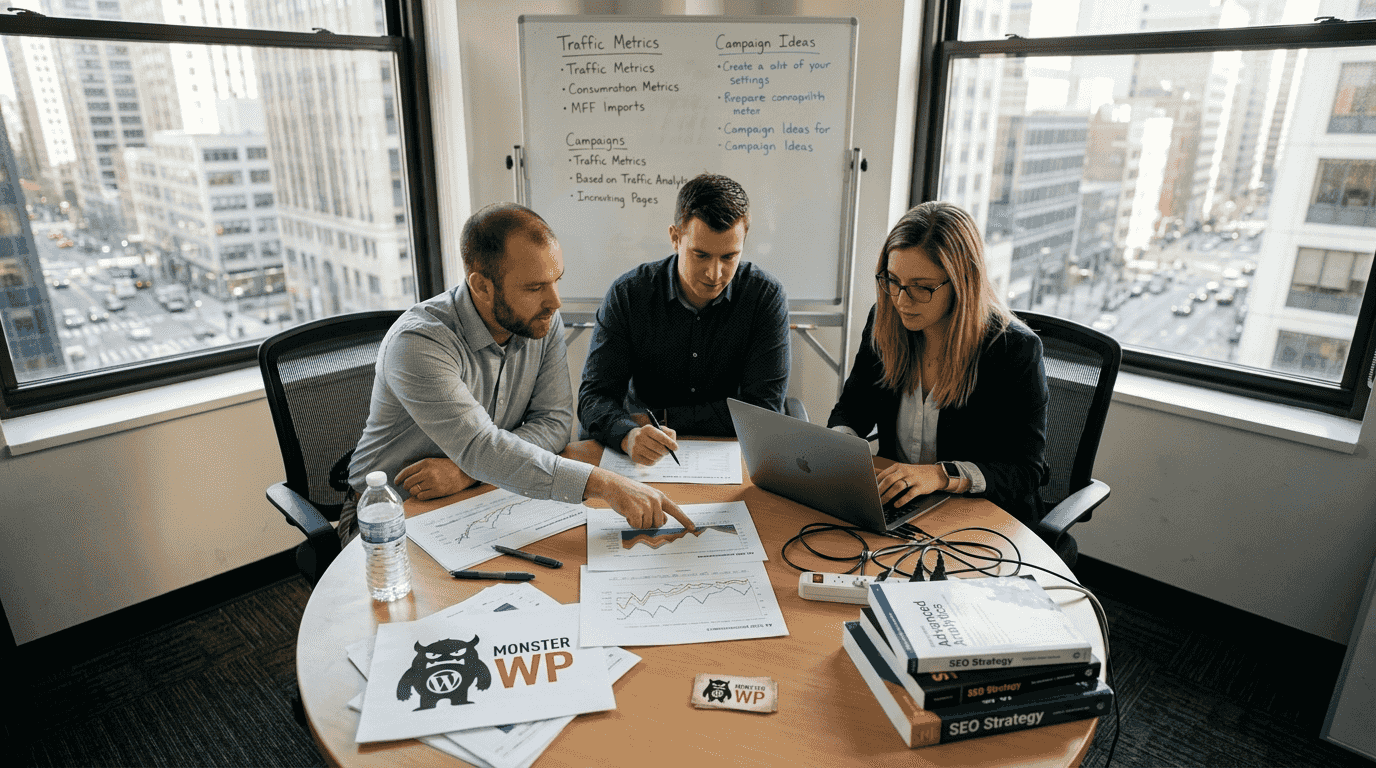
You’ve probably heard that traditional SEO is dying, replaced by AI chatbots and voice assistants that bypass search results entirely. That’s a dangerous misconception. While search is evolving, SEO remains the backbone of online visibility and lead generation for service-based businesses in 2026. The difference now is that smart business owners combine classic SEO tactics with newer strategies like Generative Engine Optimization to capture customers across both traditional search engines and AI-powered platforms. This guide shows you exactly how SEO works, why it matters more than ever, and how to leverage it for measurable business growth.
| Point | Details |
|---|---|
| SEO drives visibility and quality leads | Optimizing your website helps service businesses rank higher in search results, attracting customers actively looking for your solutions. |
| GEO complements traditional SEO | Generative Engine Optimization ensures your brand appears in AI-generated answers, expanding reach beyond standard search rankings. |
| People-first content wins in 2026 | Creating helpful, reliable content aligned with user needs improves rankings and builds trust with potential customers. |
| Multiple SEO strategies work together | On-page, off-page, and technical SEO combine to boost your site’s performance and lead generation capabilities. |
| Measuring SEO connects efforts to results | Tracking organic traffic, conversions, and keyword rankings helps you understand SEO’s direct impact on business growth. |
Search Engine Optimization (SEO) is the practice of optimizing your website’s content, structure, and technical elements to rank higher in search engine results. When potential customers search for services you offer, SEO determines whether they find your business or your competitors. For small to mid-sized service companies, this visibility directly translates to qualified leads and revenue.
The impact is measurable. SEO is crucial for trades businesses to enhance online visibility and generate leads, helping you compete effectively in local markets and online spaces. When your website appears on the first page of Google for relevant searches, you’re positioned exactly where customers make buying decisions. That placement isn’t accidental, it’s the result of strategic SEO work.
SEO comprises several interconnected components that work together:
Each component plays a critical role. Neglecting any one area weakens your overall visibility. Understanding the role of a website in digital marketing helps you see how SEO fits into your broader growth strategy.
Pro Tip: Focus your SEO efforts on customer intent rather than just keyword volume. A smaller number of highly targeted searches from ready-to-buy customers delivers better ROI than massive traffic from casual browsers. Build content that answers specific questions your ideal customers ask, and you’ll attract leads that convert.
The connection between SEO and business outcomes is direct. Better rankings mean more visibility. More visibility brings qualified traffic. Qualified traffic generates leads. This chain reaction explains why custom website design focused on boosting online leads integrates SEO from day one rather than treating it as an afterthought.
Generative Engine Optimization (GEO) is the practice of optimizing digital content to achieve favorable visibility, accurate representation, and preferential citation in AI-generated search responses. As AI tools like ChatGPT, Google’s AI Overviews, and Bing Chat reshape how people find information, GEO has become essential for maintaining brand visibility.
The fundamental difference matters. Traditional SEO focuses on ranking in search engine results pages (SERPs), while GEO ensures your brand appears prominently when AI systems synthesize information to answer user queries. When someone asks an AI chatbot for plumber recommendations or accounting advice, GEO determines whether your business gets mentioned in that response.
This shift creates both challenges and opportunities. AI-generated summaries often satisfy user queries without requiring clicks to external websites, reducing traditional traffic metrics. However, being cited in AI responses builds brand awareness and positions you as an authority, even when users don’t immediately visit your site.
| Feature | Traditional SEO | Generative Engine Optimization (GEO) |
|---|---|---|
| Primary Goal | Rank high in search result listings | Appear in AI-generated answer summaries |
| Success Metric | Click-through rate and page visits | Brand mentions and citation frequency |
| Content Focus | Keyword-optimized pages targeting queries | Structured, authoritative content AI can reference |
| Business Impact | Direct website traffic and conversions | Brand awareness and trust building |
| Optimization Approach | Meta tags, backlinks, technical structure | Schema markup, FAQ formats, concise expertise |
Adapting your content strategy for GEO doesn’t mean abandoning SEO. The two approaches complement each other:
Pro Tip: Integrate GEO tactics into your existing SEO workflow rather than treating them as separate initiatives. When you optimize a service page, add schema markup and FAQ content simultaneously. This approach future-proofs your visibility as search continues evolving toward AI-assisted experiences.
Understanding website optimization strategies for 2026 means recognizing that your content must perform across traditional search engines and AI platforms. Businesses that adapt early gain competitive advantages as customer search behavior continues shifting.
Successful SEO starts with on-page optimization. This means strategically placing relevant keywords in your page titles, headings, and body content without overstuffing. Your meta descriptions should compel clicks while accurately summarizing page content. Most importantly, Google continues to emphasize helpful, reliable, people-first content that genuinely serves user needs rather than gaming algorithms.
User experience directly impacts rankings. Pages must load quickly, display properly on mobile devices, and provide clear navigation. When visitors immediately bounce because your site is slow or confusing, search engines interpret that as a quality signal and lower your rankings accordingly.

Off-page SEO builds your website’s authority and trustworthiness. Quality backlinks from reputable industry sites signal to search engines that your content deserves higher rankings. For service businesses, local citations in directories and positive online reviews carry significant weight. Understanding the mechanics of SEO, including on-page and off-page optimization, is essential for trades businesses competing in their markets.
Technical SEO ensures search engines can effectively crawl and index your site. This includes optimizing site speed, fixing broken links, creating XML sitemaps, and implementing SSL certificates. Schema markup helps search engines understand your content context, improving how your pages appear in results.
Here’s a practical step-by-step approach for small businesses upgrading their SEO:
GEO-specific tactics enhance your AI visibility:
Pro Tip: Regularly audit both your SEO and GEO performance every quarter. Search algorithms and AI systems evolve constantly. What works today may need adjustment in six months. Set calendar reminders to review your rankings, check how AI tools reference your brand, and adapt strategies accordingly.
The role of websites in digital marketing extends beyond simple online presence. Your site must actively work to attract and convert visitors. Combining proven SEO tactics with emerging GEO strategies positions your business website for maximum visibility and qualified lead generation.
Tracking the right metrics separates effective SEO from wasted effort. Organic traffic measures how many visitors find your site through unpaid search results. This number should trend upward as your SEO improves. Keyword rankings show where your pages appear for target search terms, with first-page positions driving the most traffic.
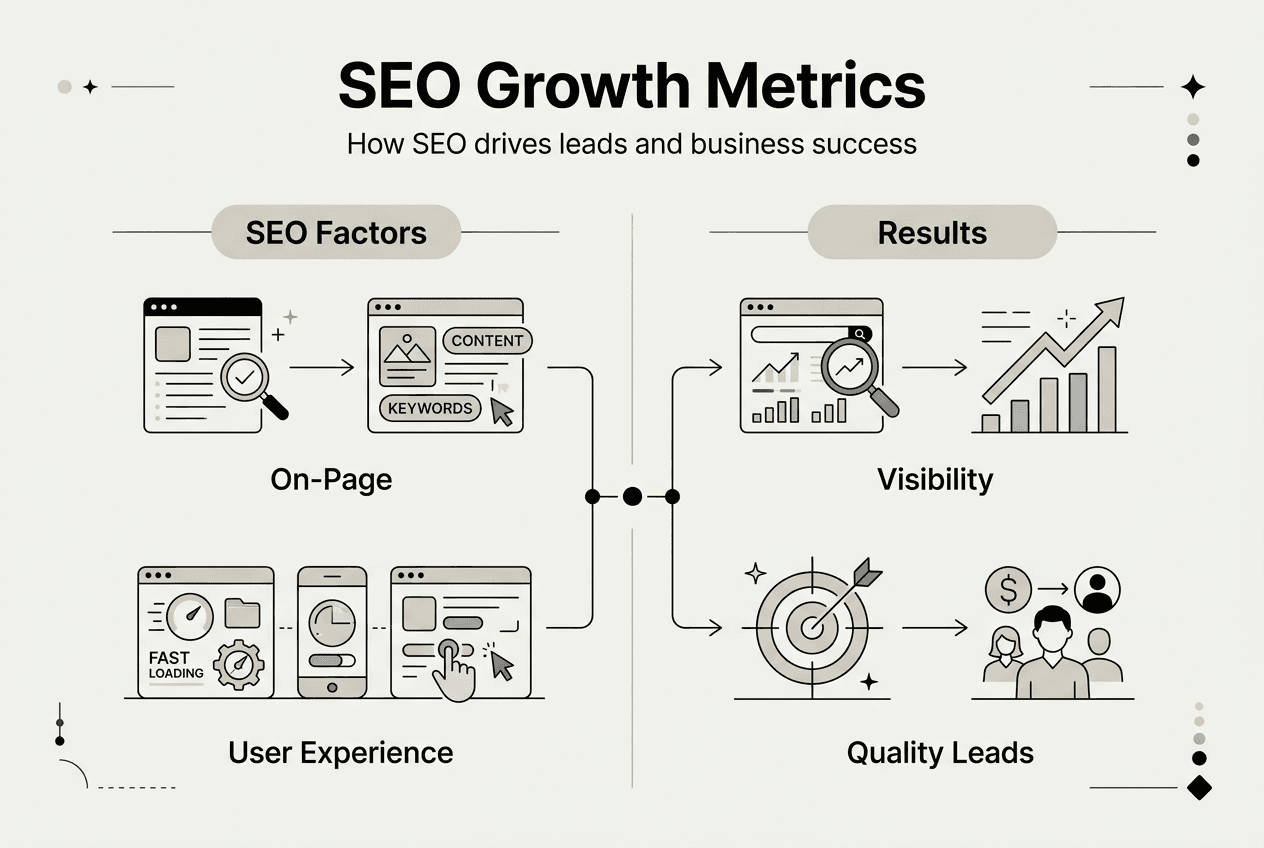
Bounce rate indicates whether visitors find what they’re looking for. High bounce rates suggest content doesn’t match search intent or user experience needs improvement. Conversion rate tracks the percentage of visitors completing desired actions like filling contact forms, calling your business, or requesting quotes. This metric directly connects SEO efforts to lead generation.
Measuring lead generation from SEO requires tracking visitor paths from search to conversion. When someone finds your site through organic search and later submits a contact form, that’s an SEO-generated lead. Phone call tracking with unique numbers on your website helps attribute calls to search traffic. Sales data showing which customers originally discovered you through search completes the picture.
The AI summary challenge complicates traditional metrics. Users are less likely to click when an AI summary appears, reducing click-through rates even when your content ranks well. However, brand mentions in AI responses build awareness that may drive traffic through other channels. This means you need broader measurement approaches beyond simple click metrics.
| Metric | What It Indicates | Target Benchmark |
|---|---|---|
| Organic Traffic | Volume of visitors from unpaid search | 20-40% month-over-month growth initially |
| Keyword Rankings | Position in search results for target terms | First page (top 10) for priority keywords |
| Bounce Rate | Percentage leaving without interaction | Below 50% for service pages |
| Conversion Rate | Visitors completing desired actions | 2-5% for service business websites |
| Average Session Duration | Time visitors spend engaging with content | 2-3 minutes minimum for quality traffic |
| Pages Per Session | Depth of visitor engagement | 2-3 pages indicates strong interest |
Several tools help track SEO performance effectively:
Pro Tip: Combine quantitative metrics with qualitative feedback to measure SEO’s true business impact. Numbers show what’s happening, but customer conversations reveal why. Ask new clients how they found you and what convinced them to reach out. These insights help refine your SEO strategy around what actually drives business decisions.
Understanding why businesses need website platforms that support lead growth means recognizing that measurement capabilities matter as much as design. Your platform should make tracking conversions straightforward. Exploring different types of business websites optimized for lead generation helps you choose structures that support both SEO performance and conversion tracking.
Understanding SEO and GEO strategies is one thing. Implementing them effectively while running your business is another challenge entirely. That’s where professional support makes the difference between theoretical knowledge and actual results.
MonsterWP specializes in building high-performance WordPress websites optimized for search visibility and lead generation from day one. Our custom WordPress websites combine strategic design with technical SEO foundations, giving you a platform that works as hard as you do. Every site includes speed optimization, mobile responsiveness, and structured data implementation so you rank well and convert visitors into customers.
Beyond website design, our managed WordPress SEO and PPC services handle the ongoing optimization work that drives sustained growth. We manage keyword research, content optimization, technical audits, and performance tracking so you can focus on serving customers rather than decoding algorithm updates. Our digital marketing add-on services integrate social media management and paid advertising to amplify your visibility across every channel where customers discover service businesses.
SEO focuses on ranking in search results while GEO optimizes for brand presence in AI-generated answers. Traditional SEO aims to position your website high in search engine listings so users click through to your pages. GEO ensures AI systems like ChatGPT and Google’s AI Overviews cite your brand when synthesizing information to answer queries. Both strategies increase visibility, but through different mechanisms as search technology evolves.
Track metrics like organic traffic growth, keyword ranking improvements, and conversion rates from search visitors. Use Google Analytics to monitor how many leads originate from organic search versus other channels. Set up goal tracking for contact form submissions, phone calls, and quote requests to connect SEO efforts directly to business outcomes. Review these metrics monthly to identify what’s working and where adjustments improve results.
Google continues to emphasize helpful, reliable, people-first content as a core ranking factor in 2026. Content created primarily for search engines rather than human readers gets deprioritized in rankings. People-first content builds user trust, encourages engagement, and naturally attracts backlinks because it genuinely helps your audience. This approach aligns with both traditional SEO best practices and GEO requirements for authoritative information AI systems confidently cite.
Start with keyword research targeting local and service-specific search terms your customers actually use. Tools like Google Keyword Planner reveal what people search for when looking for services you provide. Next, optimize existing website pages by adding target keywords to titles, headings, and content naturally. Ensure your site loads quickly on mobile devices and includes clear calls to action. Claim and complete your Google Business Profile to improve local search visibility immediately.
Discover proven website content examples that drive qualified leads and business growth in 2026. Learn criteria, see real examples, and get a practical decision guide.

Discover the 7 critical website essentials every small business needs in 2026 to drive leads, optimize performance, and maximize ROI without technical headaches.