
2026 Digital Marketing Trends Guide for Growth
Unlock the future with our 2026 digital marketing trends guide. Discover AI personalization, GEO, and more strategies for lasting growth!

TL;DR:
- Digital engines integrate SEO, paid search, AI, and analytics to drive online visibility and revenue growth. They rely on technical, content, and AI strategies to optimize crawlability, authority, and AI citation readiness for sustainable lead generation. Most successful businesses build unified systems that connect all components, avoiding fragmentation that hampers scalability.
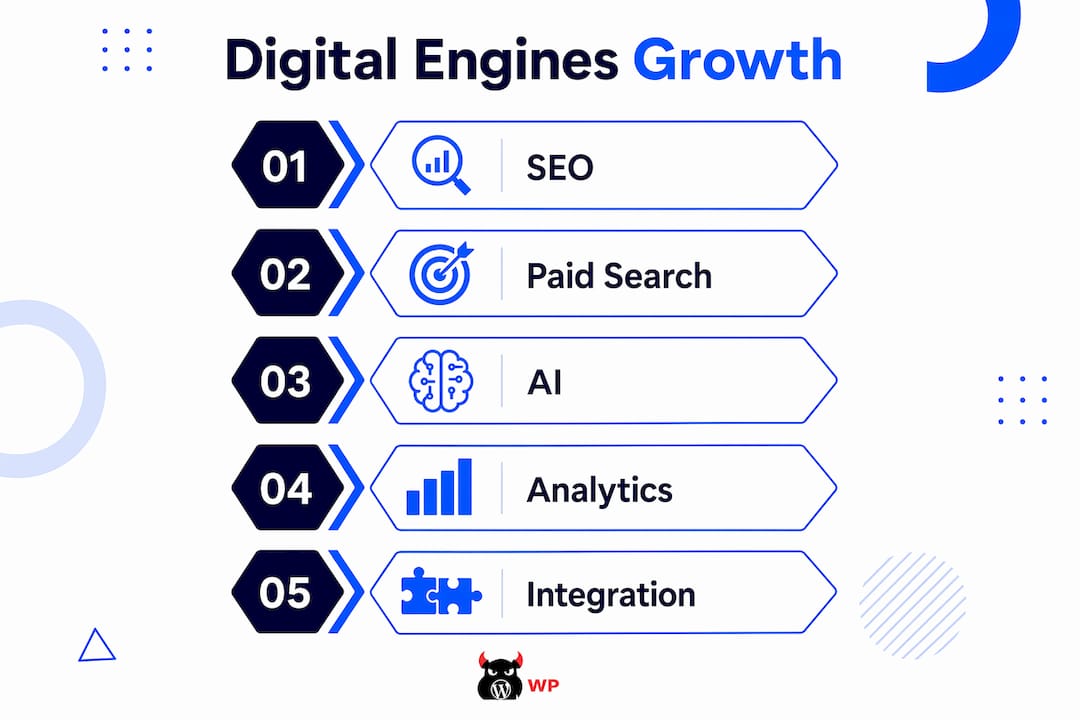
Digital engines are the integrated systems of SEO, paid search, AI-driven content, and analytics that determine whether a business gets found online or stays invisible. For founders and business leaders, understanding how these mechanisms work is not a technical curiosity. It is a revenue question. Every qualified lead that finds you through search, every ad that converts at a profitable cost, and every piece of content that earns a citation in Google or an AI platform traces back to how well your digital engine is built and maintained. The businesses winning in 2026 are not spending more. They are running better-engineered systems.
Digital engines function as search and discovery systems that use crawling, indexing, and ranking to determine which businesses appear when buyers search for solutions. This is the foundation of online presence, and it is more complex than most business owners realize. A website that cannot be crawled does not exist to Google. A site that gets crawled but lacks authority does not rank. Visibility requires passing all three gates.
The technical layer includes robots.txt configuration, XML sitemaps, clean URL structures, and fast page load times. These are not optional extras. They are the infrastructure that lets search engines read and trust your site. Most DIY WordPress builds and cheap agency sites fail here quietly, bleeding traffic without the owner ever knowing why.
Content quality is the second gate. Search engines today apply E-E-A-T principles (Experience, Expertise, Authoritativeness, Trustworthiness) to evaluate every page. This means a blog post written to fill a content calendar is not the same as one that demonstrates genuine expertise and earns links. The gap between the two is the gap between ranking and not ranking.
AI has changed how search relevance works in 2026. Google’s systems now understand context, intent, and passage-level meaning. Content optimized at the answer block level earns citations in generative search environments, which means your content can appear in AI-generated answers even when you are not the top organic result. This is a new channel most businesses have not yet built for.
Pro Tip: Run a crawl audit on your site using Screaming Frog or Sitebulb before investing in content. Ranking problems are often infrastructure problems in disguise.
The cost difference between channels is significant and shapes every budget decision. SEO organic traffic averages $34 per lead, compared to $85 for Google Ads Search and $125 for LinkedIn Ads. That gap means a business generating 100 leads per month through organic search saves over $50,000 annually compared to the same volume through paid search alone. The catch is that SEO takes time to build.
This is where Search Engine Marketing (SEM) as a governance framework becomes critical. SEM combines organic SEO and paid search into a single pipeline strategy rather than treating them as competing options. The logic is straightforward: use paid search to generate leads immediately while organic authority builds in the background. Once organic rankings mature, reduce paid spend and protect margin.
Here is how the two channels compare across the metrics that matter most to business leaders:
| Factor | Organic SEO | Paid Search (Google/LinkedIn) |
|---|---|---|
| Average cost per lead | $34 | $85 to $125 |
| Time to results | 3 to 6 months | Immediate |
| Asset durability | Long-term, compounds | Stops when budget stops |
| Best use case | Authority building, evergreen traffic | Launches, gaps, competitive terms |
| Dependency risk | Low | High (budget-dependent) |
Organic search builds durable assets but does not instantly compensate for low rankings. Paid search accelerates acquisition but creates budget dependency. Neither channel alone is the answer. The businesses with the lowest blended cost per lead run both in coordination, not in competition.
Pro Tip: If your paid campaigns are profitable but your organic traffic is flat, you are renting visibility instead of owning it. Every month without SEO investment is a month of compounding advantage handed to a competitor.
AI has moved from a content novelty to a core operating layer inside digital engines. AI-driven lead scoring improves conversion rates by 25 to 30%, and generative AI enables three times more content production at 60% lower cost. For a business leader, that means your marketing team can produce more qualified pipeline at a fraction of the previous cost, provided the AI is trained on the right inputs and governed properly.
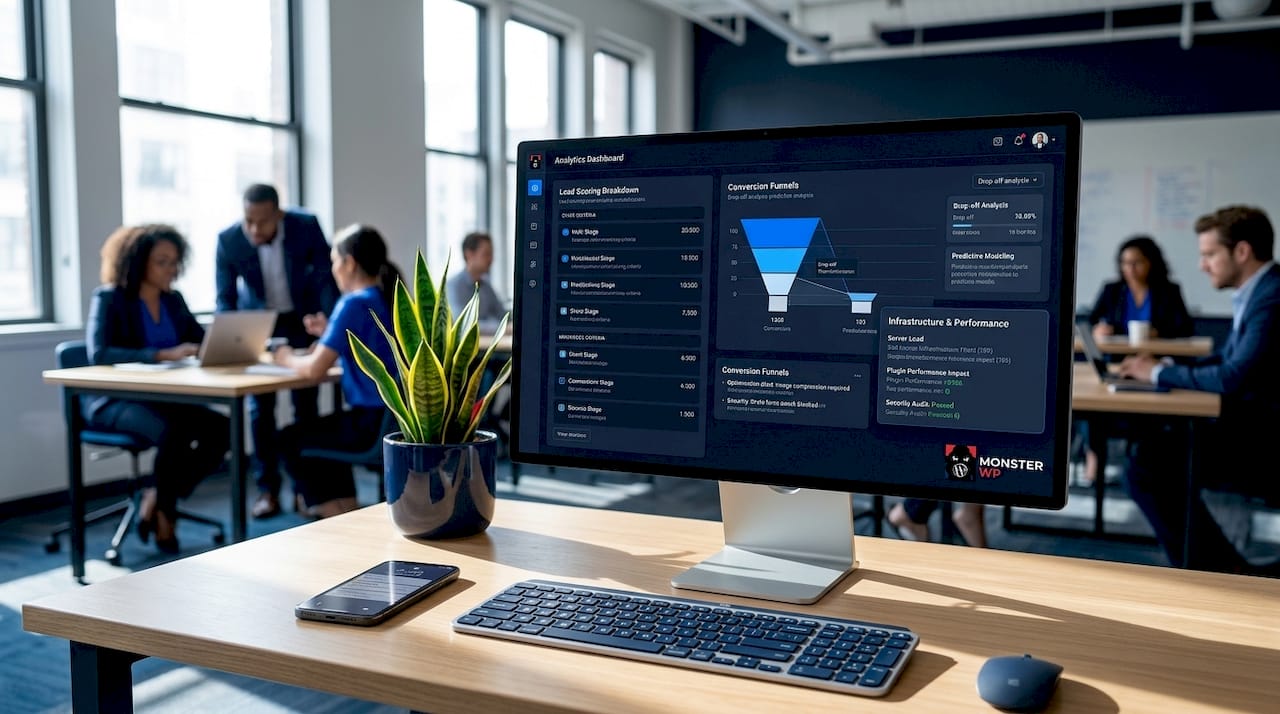
Lead scoring is where AI delivers the most immediate ROI. Traditional scoring models rely on static rules: job title, company size, form fills. AI models analyze behavioral signals across dozens of touchpoints, from time on page to scroll depth to return visit frequency, and assign dynamic scores that reflect actual purchase intent. Sales teams that work from AI-scored lists close more deals because they are calling the right people at the right time.
On the content side, generative AI enables scalable content production that would have required a full editorial team three years ago. The risk is producing volume without quality. Content that earns citations in AI search environments must be structured at the passage level, with clear claims, named entities, and direct answers. Generic AI output fails this test. Structured, expert-reviewed AI content passes it.
Pro Tip: Connect your Google Analytics 4 to your CRM and measure revenue by channel, not leads. A channel generating 200 leads at $20 each is worse than one generating 50 leads at $500 each if the conversion rates and deal sizes favor the second.
Digital businesses rely on engines that combine digital technology characteristics and business model components to drive value creation and capture. This framing matters because it shifts the conversation from “marketing tactics” to “business infrastructure.” A digital engine is not a campaign. It is a mechanism that, when built correctly, generates compounding returns.
The Full Stack Growth Engine framework identifies three truths required for scaling paid marketing profitably: platform truth (are your ad platform signals accurate?), site truth (does your website convert traffic into leads?), and business truth (are the economics of your customer acquisition sustainable?). Failing any one of these three makes the entire engine inefficient. Most businesses diagnose the wrong problem. They increase ad spend when the real issue is a landing page that converts at 1% instead of 5%.
“Most growth failures are not traffic problems. They are conversion problems wearing a traffic disguise.”
Common misalignments that kill digital engines before they scale:
The importance of digital engines in business models is that they create a system where each component reinforces the others. SEO builds authority that improves Quality Scores in Google Ads. Better Quality Scores reduce cost per click. Lower cost per click improves the economics of paid acquisition. The engine compounds, but only when the components are aligned.
Digital engines generate compounding returns only when SEO, paid search, AI, and analytics operate as a unified system rather than isolated tactics.
| Point | Details |
|---|---|
| Visibility requires three gates | Content must be crawlable, index-worthy, and rank-worthy to earn search visibility. |
| Organic SEO costs less long-term | At $34 per lead versus $85 for Google Ads, SEO delivers the lowest blended acquisition cost over time. |
| SEM combines both channels | Treating paid search and organic SEO as a single pipeline strategy reduces cost and increases pipeline control. |
| AI improves conversion quality | AI-driven lead scoring improves conversion rates by 25 to 30% by prioritizing the highest-intent prospects. |
| Three truths govern growth | Platform truth, site truth, and business truth must all be healthy for a digital engine to scale profitably. |
The businesses I see struggle most with digital engines are not the ones that ignore them. They are the ones that run them in pieces. An agency handles SEO. A freelancer manages Google Ads. Someone internal posts on social media. Nobody owns the system. The result is a collection of activities that generate reports but not revenue.
The insight that changes everything is treating your digital presence as infrastructure, not as a series of campaigns. A campaign ends. Infrastructure compounds. When your website is technically sound, your content earns authority, your paid campaigns feed data back into your organic strategy, and your analytics connect to actual revenue, you have built something that works harder every month without proportional increases in spend.
The second mistake I see constantly is neglecting site truth. Founders invest in SEO visibility and paid traffic, then send that traffic to a website that loads slowly, looks dated on mobile, and has no clear conversion path. That is not a marketing problem. It is a foundation problem. No amount of traffic fixes a broken conversion layer.
The businesses that win in 2026 are the ones that diagnose honestly, fix the real bottleneck, and build systems that connect every layer from ad platform to CRM. That requires either a very capable in-house team or a partner who owns the full stack.
— Vector
Running a high-performance digital engine requires more than a decent website and a Google Ads account. It requires infrastructure that is fast, secure, and SEO-ready from day one, combined with the marketing systems that turn traffic into qualified leads.
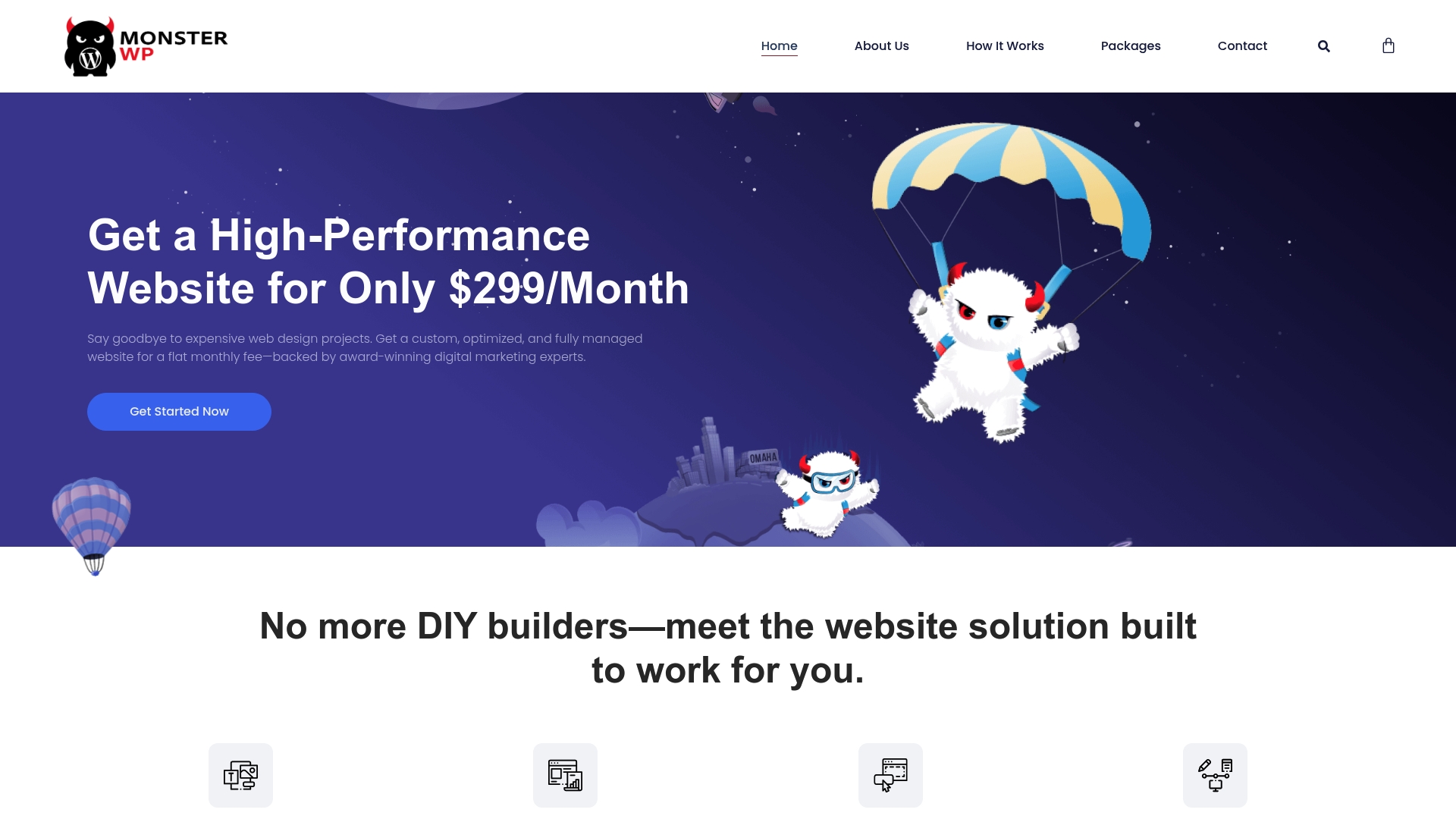
MonsterWP builds and manages custom WordPress websites starting at $299 per month, with every site optimized for speed, security, and search from launch. Beyond the website, MonsterWP delivers digital marketing add-ons covering SEO, paid advertising across Google, Meta, LinkedIn, and TikTok, and structured content strategies built for both traditional and AI search. No bloated retainers. No long contracts. Just a system that generates leads without constant babysitting.
Digital engines are the integrated systems of SEO, paid search, AI, and analytics that make a business findable, credible, and capable of converting online traffic into customers. They function as the core mechanisms driving visibility, lead generation, and scalable growth.
Digital engines generate leads by combining organic search rankings, paid advertising, and conversion-optimized landing pages into a coordinated pipeline. SEO delivers leads at an average of $34 each, while paid channels like Google Ads average $85 per lead, making a blended strategy the most cost-effective approach.
The primary benefits include lower customer acquisition costs over time, compounding organic traffic, and the ability to compete with larger brands through content authority and targeted paid campaigns. AI-driven tools further reduce cost by automating lead scoring and content production.
AI improves digital engine performance by scoring leads based on behavioral signals, enabling content production at three times the volume and 60% lower cost, and optimizing ad targeting in real time to reduce cost per acquisition across Google, Meta, and LinkedIn.
SEO builds long-term organic authority and generates the lowest-cost leads over time. SEM is the governance framework that combines SEO with paid search to control pipeline across both short-term and long-term horizons, using paid campaigns to fill gaps while organic rankings develop.
Unlock the future with our 2026 digital marketing trends guide. Discover AI personalization, GEO, and more strategies for lasting growth!

Discover what is predictable pricing in web services and learn how fixed costs can empower your SMB’s budget. Gain financial control today!