
How schema markup drives more leads and visibility
Discover the role of schema in SEO and learn how it can boost your leads and visibility. Unlock the secrets to rich search results today!

Building an online store can feel overwhelming with so many choices out there. Each platform offers a unique way to showcase your products and reach customers around the world. Some promise sleek designs while others focus on simple management or cutting edge features. Maybe you want something easy for beginners or you crave advanced options for growing your business. Curiosity grows when you realize how different each option really is. Which one will fit just right? The next sections will highlight some interesting alternatives that might surprise you.
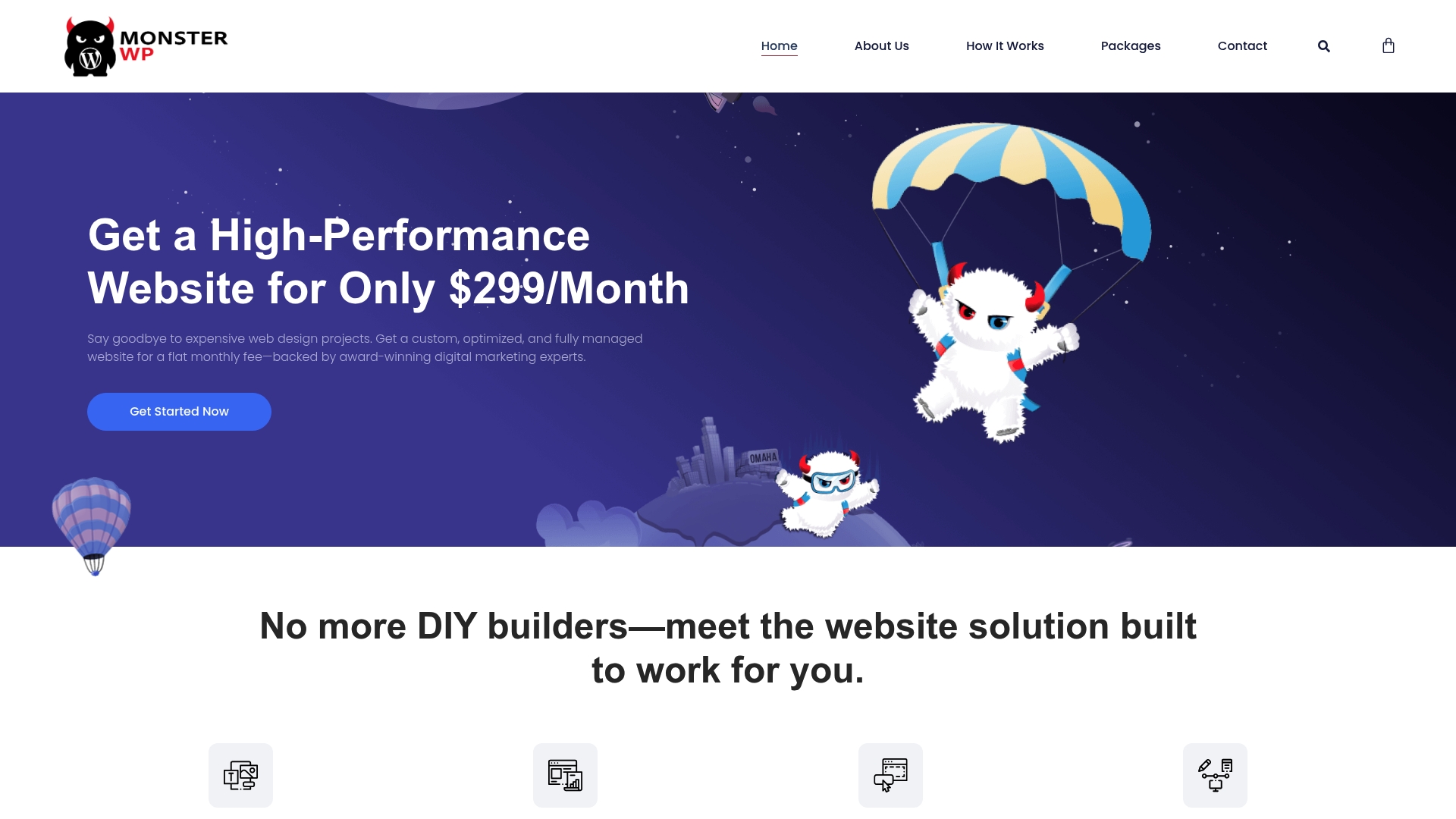
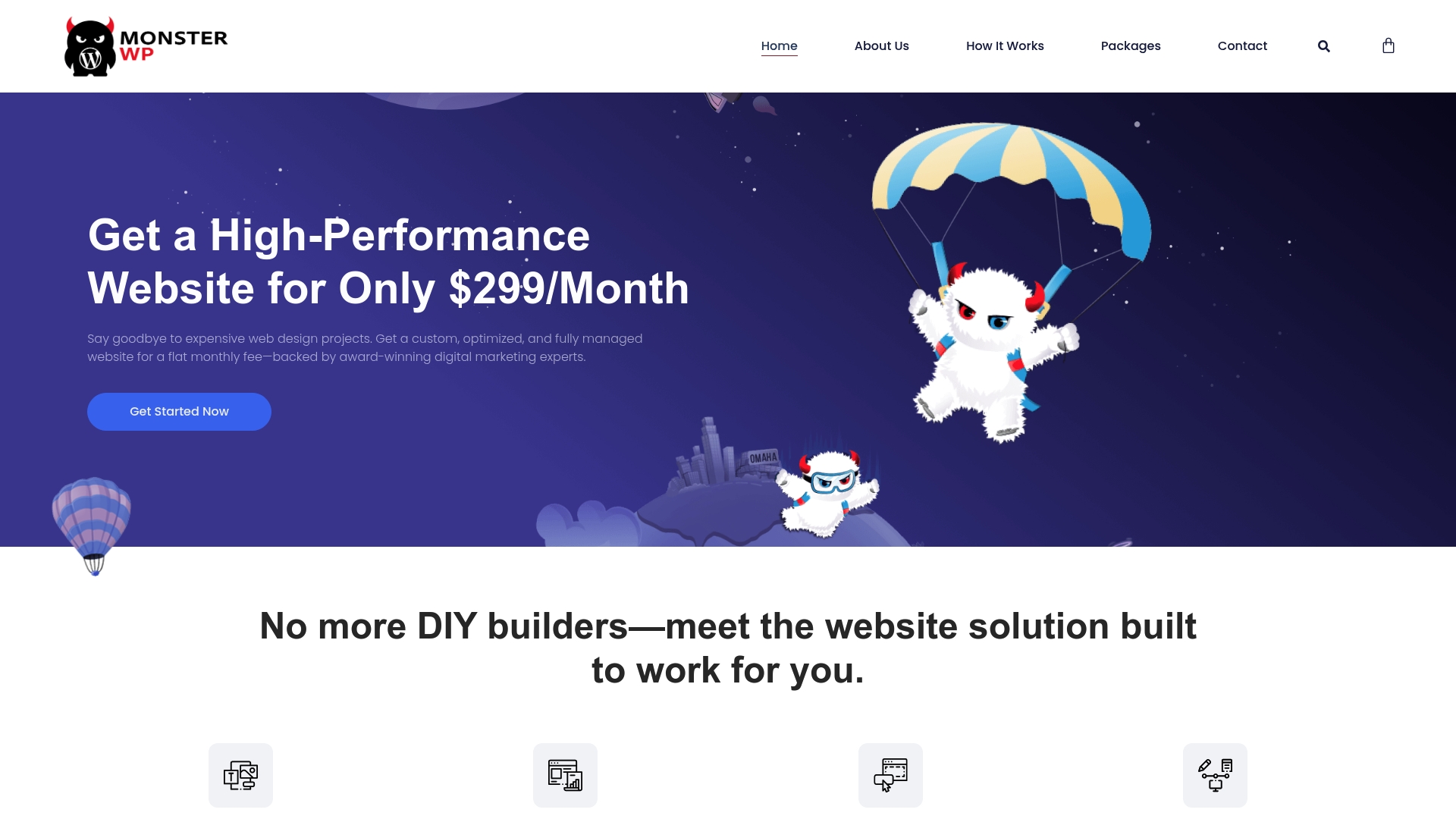
MonsterWP is a fully managed WordPress solution that removes DIY headaches by delivering custom, high-performance websites for a flat monthly fee. It combines fast loading sites, built-in SEO readiness, and ongoing management to keep your online presence reliable and effective.
MonsterWP provides custom mobile friendly websites, speed optimized performance, and SEO-ready setups from day one. The service includes full management covering design, updates, backups, and support, plus package options that add SEO and PPC for broader marketing coverage.
Fully managed service eliminates DIY work. MonsterWP handles design, hosting, updates, and support so you focus on running your business.
Affordable flat monthly fee with no upfront costs. The clear pricing model lets you predict expenses and avoid large development invoices.
Strong emphasis on speed and SEO. Sites are optimized for fast load times and include local SEO and Google My Business optimization out of the box.
Ongoing support and updates are included. Continuous maintenance keeps sites secure, current, and performing without agency complexity.
Multiple packages to match business needs. Choose website only or add SEO and PPC for an integrated growth stack.
MonsterWP fits small to medium sized businesses, startups, and local service providers that want a professional website without hiring an agency or handling technical maintenance. If you need a dependable site that drives visibility and saves time, this service matches that need precisely.
MonsterWP stands out because it packages design, performance, and marketing into a single predictable monthly plan starting at $299 per month. The combination of fully managed hosting, day one SEO readiness including local optimizations, and optional marketing packages creates a turnkey solution that outperforms piecemeal approaches where design, speed, and search visibility are handled by separate vendors.
Smart buyers choose MonsterWP because it reduces vendor overhead, eliminates time wasted on technical upkeep, and brings measurable search visibility improvements. The result is a high quality site that protects revenue, increases local discoverability, and generates qualified leads without constant babysitting.
A local restaurant used MonsterWP to replace an outdated site with a modern, fast, and SEO optimized website they did not have to manage. The owner regained time to focus on service while the site delivered better local search visibility and simpler menu and reservation updates.
Plans start at $299 per month for the Custom Website package, with additional packages available for SEO and PPC to build a more comprehensive digital marketing program.
Website: https://monsterwp.com
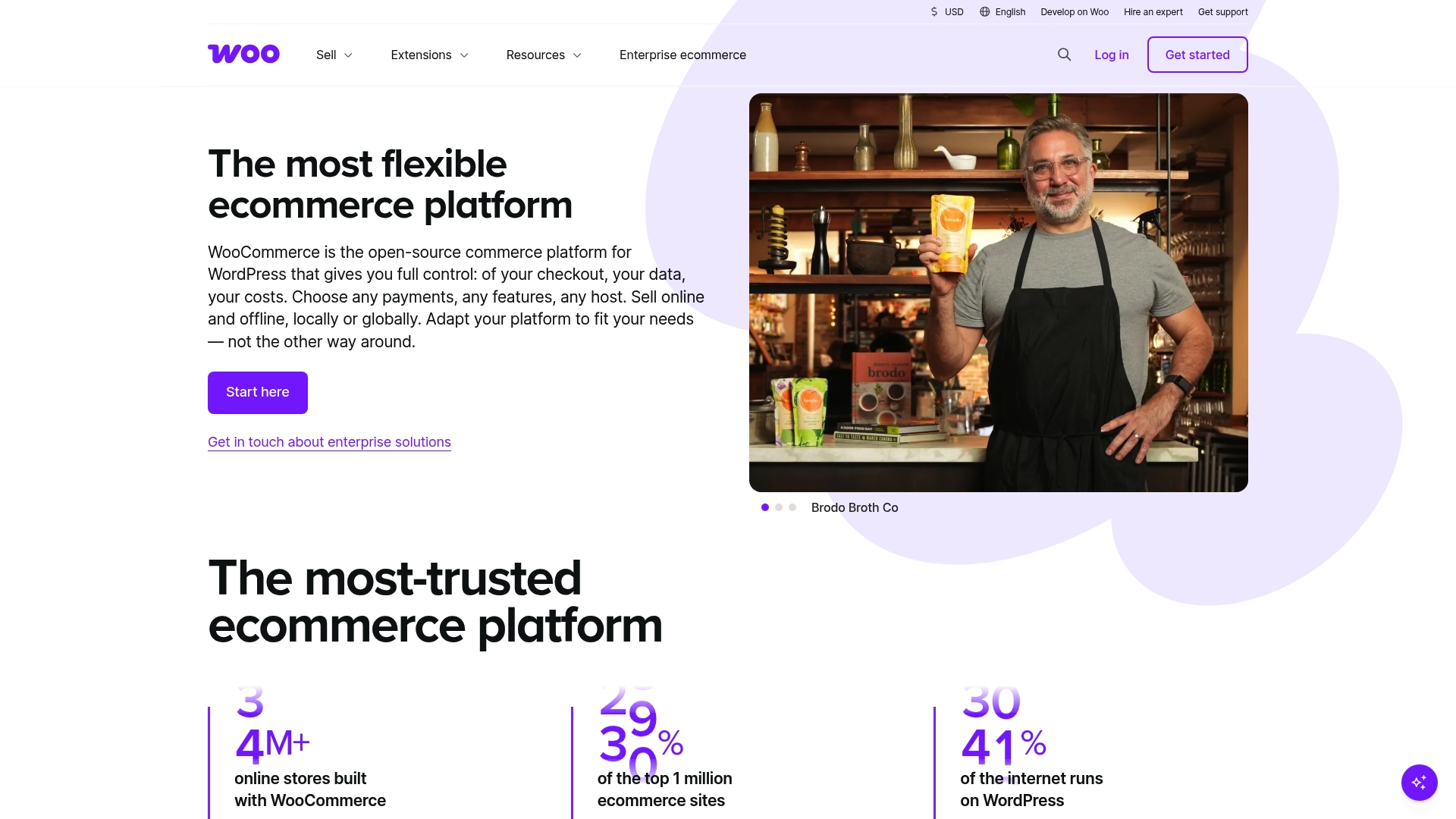
WooCommerce is an open-source platform that gives you direct control of checkout, data, and costs while running on WordPress. It rewards users who want flexibility and ownership, but it asks for more technical involvement than hosted alternatives.
WooCommerce delivers deep WordPress integration, a wide library of themes and extensions, and native support for online and in-person selling. You manage hosting and select payment, shipping, and marketing add ons so you decide performance and costs.
Highly customizable with extensions and themes: You can shape storefronts, checkout flows, and product experiences using thousands of plugins and theme options.
No platform fees or revenue sharing: You keep all sales revenue and only pay hosting and any paid extensions you choose.
Strong community and resource library: The ecosystem provides guides, forums, and developer support that speed troubleshooting and custom builds.
Flexible hosting and payment options: You can pick managed WordPress hosting or self host, and integrate the payment processors you prefer.
Scalable for small to large businesses: Sites can start simple and grow with additional extensions and stronger hosting as traffic rises.
Requires some technical knowledge or hosting setup: You or a partner must manage hosting, security, and updates to keep the store stable and fast.
Can become complex with many extensions: Adding multiple plugins raises the risk of conflicts and increases maintenance overhead.
Cost can increase with premium extensions and hosting: Basic use is free but enterprise needs often require paid extensions and higher hosting budgets.
WooCommerce suits entrepreneurs and business owners who want ownership of their store and control of costs. It fits developers and agencies that customize solutions, and teams planning gradual scale without giving revenue share to a hosted platform.
WooCommerce offers full ownership of your ecommerce stack on WordPress, letting you control hosting, data, and extensions. That control appeals when you want tailored checkout experiences, specific integrations, or to avoid platform revenue fees.
Established brands have used WooCommerce to migrate complex catalogs and keep branding intact. Examples from the product data include Nutribullet, House of Malt, and Dan-O’s Seasoning, which built stores to improve customer experience and scale sales.
The core platform is free to download and use. Paid extensions typically range from $29 to $299 per year, and hosting costs can vary widely from about $25 to $350 per month or more depending on provider and performance needs.
Website: https://woocommerce.com
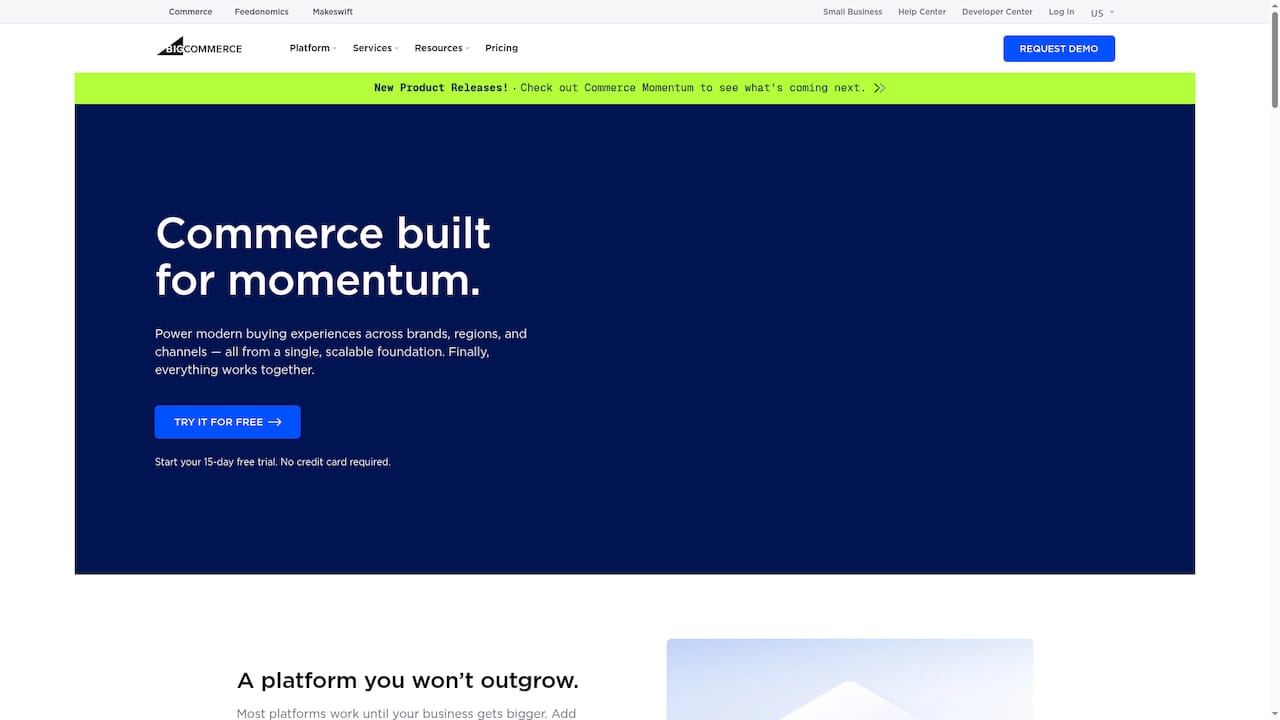
BigCommerce is a scalable ecommerce platform built for mid-market and enterprise brands that need flexibility and control. It pairs Open SaaS architecture with enterprise support to handle growth, international selling, and complex integrations without locking you into proprietary limits.
BigCommerce provides headless commerce and composable options, unlimited API calls, multi-channel selling, and multi-storefront capabilities to manage brands or regions from one dashboard. The platform also includes advanced promotion tools, gift cards, and enterprise grade security with 24 7 global support.
Scalable and flexible: The platform scales from rapid growth to enterprise demands while keeping architecture adaptable for custom builds.
No transaction fees: BigCommerce does not add platform transaction fees and supports a wide range of payment providers for cost control.
Strong security and support: The service focuses on uptime and security and provides 24 7 expert support for mission critical stores.
B2B and B2C tools: Native tools support both wholesale workflows and consumer storefronts so hybrid businesses can manage both models.
Rich resources and services: The platform offers comprehensive documentation, a community, and professional services to accelerate complex projects.
Tailored pricing can be costly: Enterprise plans require a custom quote and pricing can be higher than small business alternatives.
Requires technical expertise for custom work: Custom development and deep integrations typically need engineering resources for proper implementation.
Feature breadth can overwhelm: The large set of capabilities can feel complex for teams without dedicated ecommerce operations or a technical lead.
BigCommerce fits mid sized to large ecommerce companies that need a flexible, enterprise grade platform with deep customization and integration capabilities. Teams that plan for international growth, multi channel selling, or B2B commerce will extract the most value.
BigCommerce combines open architecture with enterprise features so you can build custom storefronts and connect third party systems without platform lock in. That combination makes it a practical choice when control, scale, and multi channel reach are priorities.
Uplift Desk moved to BigCommerce and used the platform to expand capability and channels. They reported a 226% increase in orders and a 203% increase in customers after upgrading and leveraging BigCommerce features.
Request a quote for enterprise plans. BigCommerce also offers options for small businesses and essentials packages so teams of different sizes can find a suitable plan.
Website: https://www.bigcommerce.com
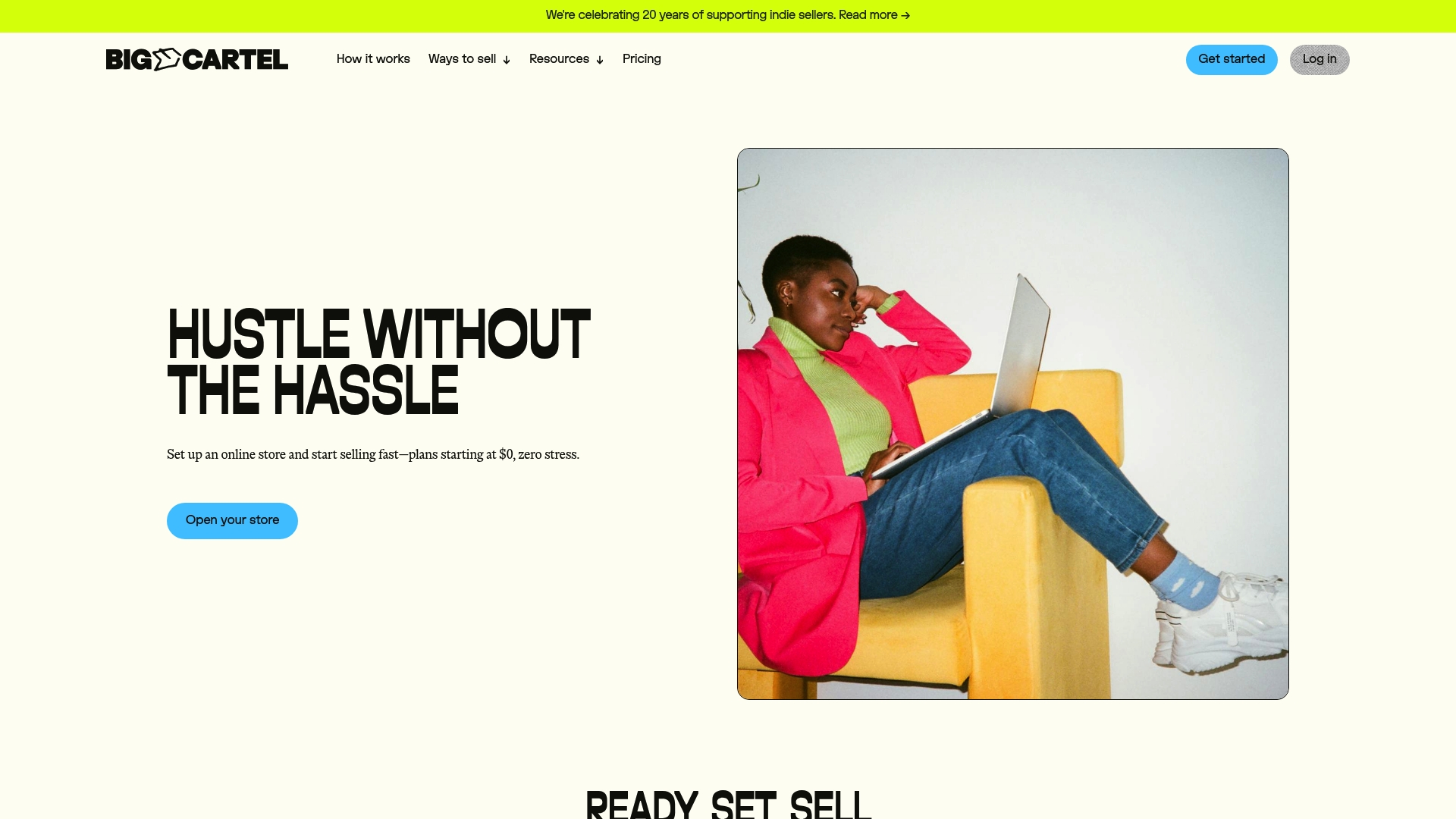
Big Cartel gives independent creators a straightforward way to sell online with minimal setup and a genuine free tier. It prioritizes simplicity and fast store launches, which makes it a reliable option for artists and makers who want to sell without hiring an agency.
Big Cartel centers on customizable templates that let you shape a storefront without code and supports both physical and digital products. The platform includes inventory and order management, shipping label printing, and order tracking plus direct integration with social platforms like Instagram, Facebook, and Google Shopping.
Big Cartel fits independent creators, artists, small boutique owners, and makers who need a low friction, affordable storefront. It appeals when you manage product design and marketing yourself and do not want an agency or complex technical setup.
Big Cartel combines an easy setup with a genuine free plan so creators can validate products and sell fast. The platform focuses on the essentials of selling and marketing while keeping the interface uncluttered for users who value speed over enterprise features.
A jewelry designer uses Big Cartel to showcase seasonal collections, sell limited runs, and link product posts directly to an Instagram audience. She manages inventory, prints shipping labels from the dashboard, and runs occasional discount promos without extra development work.
Plans start at $0 for the basic plan, with paid options at $15 per month for Platinum and $30 per month for Diamond. The free tier is useful for testing and low volume sales and paid plans add more products and advanced features.
Website: https://www.bigcartel.com

Miva is an ecommerce platform built around AI-powered product discovery that helps merchants manage complex catalogs and deliver personalized shopping experiences. It targets B2B, B2C, and hybrid sellers who need unified data and intelligent merchandising to increase profitability.
Miva combines Vexture® AI search and merchandising, PageBuilder for no-code page creation, real-time native integrations via Miva Connect, and native payments through MivaPay. The platform emphasizes fast pages and catalog scale while unifying data to power intelligent product discovery across channels.
Miva suits merchants running large complex inventories who need AI-driven merchandising and seamless native integrations. This includes B2B wholesalers, hybrid sellers handling both business and consumer accounts, and niche verticals like automotive and industrial product retailers.
Miva’s strength is its combination of AI search and unified commerce data built directly into the platform so merchants avoid heavy plugin stacks. That integrated approach aims to speed time to value while keeping catalog performance and merchandising control in-house.
A retailer uses Vexture® to surface personalized product recommendations and refine search relevancy across channels. Merchandising and catalog rules run natively so the team reduces manual configuration while improving average order value and conversion rates.
Pricing is not specified on the website. Miva directs interested parties to schedule a demo to receive tailored pricing and implementation details based on catalog size and business model.
Website: https://www.miva.com
The following table provides a side-by-side comparison of various e-commerce solutions, listing their key features, advantages, limitations, pricing details, and best-suited user groups.
| Platform | Core Features | Pros | Cons | Pricing |
|---|---|---|---|---|
| MonsterWP | Fully managed WordPress websites, speed-optimized, SEO-ready | Simplifies website management; Affordable flat rate; Performance-focused | Limited customization flexibility | $299/month for the Custom Website package |
| WooCommerce | Open-source platform integrated with WordPress, customizable themes, and extensions | Control over costs and features; Strong community support; Scalable | Requires technical knowledge; Costs may rise with extensions | Free core platform, extensions $29–$299 per year, hosting $25–$350/month |
| BigCommerce | Scalable Open SaaS architecture, headless commerce, multi-channel selling | No transaction fees; Enterprise support and flexibility; Global scalability | Complex feature set; Higher pricing for advanced plans | Quote-based for enterprise; Small business options available |
| Big Cartel | Simplified store setup, supports physical and digital products | No code required; Genuine free plan; Integrated social channel selling | Limited to basic customization; Additional features often require third-party tools | Free tier, Paid plans $15 – $30/month |
| Miva | AI-driven tools for merchandising and catalog management | Advanced native features; High performance; Comprehensive support | Pricing requires a demo; Platform suitable for larger catalog operations | Tailored pricing upon consultation |
If you are exploring Shopify alternatives for 2026, the article highlights common challenges like high costs, limited control, and technical headaches. You want a solution that offers custom performance, built-in SEO, and ongoing management without surprises. MonsterWP understands that business owners are tired of overpriced agencies and DIY website struggles. Our platform delivers fully managed WordPress websites tailored to your needs starting at $299 per month.
Ready to upgrade your online presence with a custom site that is fast, secure, and optimized from day one? Explore how MonsterWP combines design, hosting, SEO, and digital growth under one roof. Learn more about our approach in the Website & Design Archives – MonsterWP and get answers to common questions at Common Questions Archives – MonsterWP. Visit https://monsterwp.com today to protect your revenue, increase visibility, and generate qualified leads without agency complexity.
Choosing Shopify alternatives can provide more tailored features, reduced fees, and specialized support that may better meet your business needs. Evaluate your specific requirements, and compare alternative platforms to find options that align with your goals.
To transition smoothly, begin by auditing your existing Shopify store’s data and settings. Export your product listings, customer information, and sales history, then import this data into your new platform within a few weeks for minimal downtime.
Look for features that are essential for your business, such as ease of use, customization options, pricing models, and customer support. Compile a checklist of your must-have functionalities to guide your evaluation process.
Assess the inventory management capabilities of each alternative to confirm they can accommodate your product range. Implement your new system gradually, monitoring inventory accuracy to identify any necessary adjustments within the first month.
Many Shopify alternatives offer built-in SEO tools, such as customizable URLs, mobile optimization, and meta-tag editing. Prioritize platforms that provide these features to enhance your store’s visibility on search engines right from the launch.
Typically, you may start seeing results within a few months after switching to a new platform. Track your website performance metrics closely during the transition to gauge improvements in traffic and sales.
Discover the role of schema in SEO and learn how it can boost your leads and visibility. Unlock the secrets to rich search results today!

Transform your small business website with essential revenue-driven website features. Unlock potential leads and boost conversions today!